Showing posts with label following jesus into love and nonviolence. Show all posts

Friday, April 07, 2017

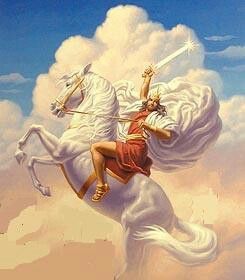
Why Is Jesus Violent In Revelation?


According to the book of Revelation, when Jesus returns He will bring an army and strike down His enemies in a bloody war.

Before I get into this one, let’s start off with a few observations: First, this objection seeks to temper the numerous commands of Jesus to love our enemies, turn the other cheek and bless those who curse us by saying, “Look! Jesus gets violent in the end”, as if this negates His clear commands to His disciples.

It does not.

Whatever Jesus has commanded, we must obey. Regardless of what might happen in the future, we here today are still expected to follow Jesus as our Lord. As He says, “Why do you call me ‘Lord, lord’ and do not do what I say?” (Luke 6:46)

Secondly, just because Jesus acts as the Judge of all mankind—as He is seen doing in these Apocalyptic passages within Revelation—it does not follow that we are also allowed to act as judges.

In fact, we are specifically told by Jesus not to judge others, and we are reminded by Paul that our calling is to feed our enemies and to allow God to be the judge who repays them for any evils they may have done.

“Do not repay anyone evil for evil. Be careful to do what is right in the eyes of everyone. If it is possible, as far as it depends on you, live at peace with everyone. Do not take revenge, my dear friends, but leave room for God’s wrath, for it is written: “It is mine to avenge; I will repay,” says the Lord. On the contrary: ‘If your enemy is hungry, feed him; if he is thirsty, give him something to drink. In doing this, you will heap burning coals on his head.’ Do not be overcome by evil, but overcome evil with good.” (Romans 12:17-21)

So, what exactly is going on in Revelation? Why do we see a picture of Jesus that looks so radically different than what we see in the Gospels? How did He go from the suffering servant who said, “Father, forgive them for they know not what they do” to the guy on a white horse with a sword coming out of his mouth and wearing a robe dipped in blood?

Let’s look at Revelation Chapter 19 where most of this violent imagery is found.

Especially these verses: 

“I saw heaven standing open and there before me was a white horse, whose rider is called Faithful and True. With justice he judges and wages war. His eyes are like blazing fire, and on his head are many crowns. He has a name written on him that no one knows but he himself.  He is dressed in a robe dipped in blood, and his name is the Word of God. The armies of heaven were following him, riding on white horses and dressed in fine linen, white and clean. Coming out of his mouth is a sharp sword with which to strike down the nations. “He will rule them with an iron scepter.” He treads the winepress of the fury of the wrath of God Almighty.  On his robe and on his thigh he has this name written: King of kings and Lord of lords.

"And I saw an angel standing in the sun, who cried in a loud voice to all the birds flying in midair, 'Come, gather together for the great supper of God, so that you may eat the flesh of kings, generals, and the mighty, of horses and their riders, and the flesh of all people, free and slave, great and small.'

"Then I saw the beast and the kings of the earth and their armies gathered together to wage war against the rider on the horse and his army. But the beast was captured, and with it the false prophet who had performed the signs on its behalf. With these signs he had deluded those who had received the mark of the beast and worshiped its image. The two of them were thrown alive into the fiery lake of burning sulfur. The rest were killed with the sword coming out of the mouth of the rider on the horse, and all the birds gorged themselves on their flesh.”  (Revelation 19:11-21)

Pastor Mark Driscoll famously celebrated the gore of Revelation at one time, saying that Jesus is depicted here as “a prize fighter with a tattoo down His leg, a sword in His hand and the commitment to make someone bleed.” For some Christians, this picture of Jesus is the one they prefer. Driscoll himself has said that he finds great comfort in this violent picture of Jesus because, “…that is a guy I can worship. I cannot worship the hippie, diaper, halo Christ because I cannot worship a guy I can beat up.”

For those who embrace a more violent Gospel, this seemingly violent Jesus serves as a welcome buffer against the Jesus they appear to fear the most: The Jesus who commands them to love their enemies and turn the other cheek. But what is really happening here? Is Jesus suddenly a warmonger who delights in slaughtering thousands of His enemies? What happened to the command that we should love our enemies? Are we held to a higher standard that God? Isn’t the admonition to love our enemies connected to God’s love for the just and the unjust? Aren’t we imitating God when we do this? How then can we explain these passages in light of the Sermon on the Mount?

First of all, we have to recognize that the book of Revelation is a different genre of Biblical literature than the Gospels are. In the same way that none of us would read a fantasy novel like “The Lord of the Rings” the same way we might read a romance novel, or a children’s story, we cannot read all genre’s of Biblical literate the same way either.

The book of Revelation is an example of apocalyptic literature. As such, it contains certain motifs and even borrows specific metaphors from other apocalyptic sections of books like Isaiah, Jeremiah, Ezekiel and Daniel. These images and metaphors are never to be taken literally. The original audiences for these writings did not believe that the smoke from a city that was judged by God would literally rise up forever and ever. They understood that this was hyperbole intended to illustrate that the finality of such judgement was absolute—as far as those who received that judgement were concerned. In the Gospels, even Jesus referred to these same apocalyptic metaphors whenever he prophesied the destruction of Jerusalem and the end of the Jewish age. (See Matthew 24, Mark 13 and Luke 21)

So, if we understand that the images we read about in Revelation are not intended to be literal, that can help us on one level, but we still may wonder what exactly is going on and what is it we are supposed to glean from passages like chapter 19?

First of all, Revelation 19 shows us a picture of Jesus as the Judge of the World. He has been given authority by the Father to judge the nations and to execute judgment on those who have rejected Him as their King. The sword is not in His hand, as Driscoll claims. It is coming out of His mouth. Why is that? Why does Jesus pull a sword out of His mouth like a magician on a carnival sideshow? Again, because this isn’t meant to be taken literally. The sword that comes out of His mouth is symbolic. It tells us that the judgments spoken by Jesus have authority. His words hold the power of life and death.

The robe Jesus wears is dipped in blood, but we must keep in mind that this blood is not the blood of His enemies. It is His own blood. Jesus has the authority to judge the nations because He has suffered and died and risen again to sit at the right hand of the Father. The Lamb who was slain is given the authority to open the seals of the scroll and to execute judgement. Only the Lamb who was slain is worthy. No one else.

Still, we have to admit that the imagery near the end of the chapter is quite gruesome. Birds are called to gorge themselves on the flesh of the slain. But, again, we have to remember that the connection between the apocalyptic hyperbole and the actual fulfillment is not the same thing.

When God prophesied against Egypt in Isaiah 19, we read that God will be seen “riding on a swift cloud” (v.1) as He comes to judge that nation. This is not a literal event. God is not saddling up a cloud and riding into battle against Egypt. The fulfillment of that image is when the armies of an invading nation ride into battle against Egypt and destroy her cities. In other words, these fantastic images of God (or Jesus) riding into battle against the people of the earth to do battle with them is fulfilled when the armies of other nations rise up and attack. There is always a practical fulfillment to these sorts of prophesies, as we see whenever God’s prophets proclaim judgment on nations using these kinds of apocalyptic hyperbole.

In Ezekiel 39 when God prophesies against Assyria (or Gog) He says “I will give you to the birds of prey of every sort and the beasts of the field to be devoured.” (v.4) This is the exact same apocalyptic hyperbole used in Revelation 19 to describe the fate of those who will be judged by the words spoken by Jesus against those who reject Him as their King.

Simply put, Jesus is the righteous judge. He has said that those who reject Him will perish and will not receive life. This is the sword that comes out of His mouth. Those who refuse to repent and to turn to Jesus as their Lord will die. They will not receive the gift of life. The author of Revelation borrows violent apocalyptic hyperbole found in the Old Covenant scriptures to illustrate this truth. He expresses it in dramatic, yes even violent metaphorical terminology, but if we boil everything down all that is really happening in Revelation 19 is that Jesus, who is the Judge, speaks life to those who love Him and those who reject that life receive the penalty of death.

Jesus takes no pleasure in the death of anyone. Not even those who reject Him. His love for you is the same as His love for Hitler. That is to say: enough to die for both of you and to extend to everyone the same mercy, grace and forgiveness.

The images of Jesus riding into battle on a white horse with a sword coming out of His mouth are meant to call the sinner to repentance. It is intended to warn those who have rejected Jesus as Lord of their ultimate fate—which is certain death—if they refuse to accept the life that is available only through Christ.

[From the bonus e-book “Unraveled” by Keith Giles]

Monday, February 06, 2017

LISTEN: Part 2 of the Unchurching Podcast Interview with Keith Giles about "Jesus Untangled"


So excited to share part 2 of my conversation with Richard Jacobson and Gunnar Falk about my new book.

Dare I say it, part 2 of this interview is way better than part 1.

LISTEN NOW

Did you miss Part 1?

LISTEN HERE

The book, "Jesus Untangled:Crucifying Our Politics To Pledge Allegiance To The Lamb" is available now at Amazon.

ORDER TODAY


Monday, December 19, 2016

5 MINUTE VIDEO: Let's Talk about "Jesus Untangled"


Can you convert a culture if that culture has already converted you?

Keith talks about his new book, "Jesus Untangled: Crucifying Our Politics to Pledge Allegiance to the Lamb" and explains why he wrote the book and how the greatest threat to Christianity in America might actually be "American Christianity".

To learn more visit: www.JesusUntangled.com


Thursday, December 01, 2016

Jesus Came To End War


Over the last few years, I've debated and argued and reasoned with many Christians on the subject of non-violence.

I've tackled all the usual arguments - what about Cornelius the centurion, or when Jesus overturned the tables in the Temple, or when Jesus said he came to bring a sword, or when Jesus told the disciples to go and buy a sword - and I've recorded podcasts, made videos, hosted events, and written blogs and books to answer all of those objections to the idea that Jesus really was anti-war and pro-peace.

But here's another angle on the whole subject:

Jesus is the Messiah.

The Messiah is called the "Prince of Peace".

It is prophesied in Isaiah that he would "do no violence".

His mission is to "teach us his ways so that we may walk in his paths."

His "path" leads the nations to "beat their swords into plowshares and their spears into pruning hooks" so that "nation will not take up sword against nation, nor will they train for war anymore."

When Jesus arrives on the scene, he comes as a baby, not a warrior.

His birth is announced by angels who proclaim, "Peace on earth!" and goodwill to all men.

His message was that we should love one another, and turn the other cheek, and bless those who curse us, and do good to those who hate us.

After saying that he added, "Why do you call me 'Lord, Lord' and do not do what I say?"

He rebuked James and John when they wanted to call down fire from heaven against another person saying, "you know not what spirit you are of".

He wept as he entered Jerusalem - the city of peace - on a donkey saying, "If only you had known the things that make for peace."

He disarmed Peter saying, "Those who live by the sword will die by the sword."

He told Pilate at his trial, "My Kingdom is not of this world. If it were, my disciples would fight."

He prayed for those centurions who nailed him to the cross saying, "Father forgive them, they know not what they are doing."

He rose from the dead, appeared to the disciples who abandoned him and denied him and said, "Peace!"

He disarmed a zealous Pharisee named Saul of Tarsus who was going around having Christians arrested, beaten and stoned to death saying, "It is hard for you to kick against the pricks" - meaning that violence against his children was physically painful to him as well.

This same Pharisee denounced violence and began to preach "the gospel of peace" wherever he went.

He reminded us that "our weapons are not carnal" and that our enemy is "not flesh and blood."

He urged us to "overcome evil with good" and reminded us to "feed our enemy if they are hungry and to give them water if they are thirsty."

Jesus is the Prince of Peace. 

His Kingdom is here now.

His purpose is to overcome evil with good; to disarm hatred with love; to transform this violent world with proactive agape.

This is not a fringe teaching. It is not an addition to the Gospel. 

It IS the Gospel of Jesus.

-kg


Thursday, September 29, 2016

5 MINUTE VIDEO: How To Love Your Enemy


Jesus raised the bar pretty high on love, even going so far as to say that we should love our enemy. But how do we do that? Is it really even possible?

Take about 5 minutes and listen as Keith provides practical examples of how to love your enemy as Jesus commanded.


Saturday, August 06, 2016

Why We Shouldn't Fight


Paul’s conversion experience was miraculous, but it also tells us a lot if we’ll pay close attention to the details.

First, Paul thought he was doing God a service by travelling around to arrest Christians. Sometimes this “ministry” involved standing by while these Christians were brutally beaten or stoned to death. But for Paul, these were necessary steps to ensure that those who held differing religious opinions were silenced.

Then, something incredible happened. Jesus appeared to him on the road to Damascus and knocked him off of his horse.

The words Jesus spoke to Paul in that moment are especially profound. He said:

“Saul, Saul, why are you persecuting Me? It is hard for you to kick against the goads.’” [Acts 26:14]
So, here Jesus explains to Paul [Saul] that whenever he does harm to someone who is in Christ, he is actually causing harm to Jesus, too.

Keep this in mind.

If anyone does harm to another Christian, then they are doing harm to Jesus.

It doesn’t matter if we try to justify our violence by saying, “But Jesus, those Christians were disagreeing with my theology”, or “Those Christians were soldiers fighting for the other side.”

It doesn’t matter if we attempt to validate our aggression by claiming that those Christians are citizens of another nation.

It doesn’t make any difference to Jesus if our reasons for hurting, or shooting, or bombing, or killing our brothers and sisters in Christ are based on religion, or nationalism, or anything else.

No. The simple truth is this: We are not allowed to bring harm of any kind to another brother or sister in Christ for any reason.

There is no excuse.

According to Jesus, whenever we do harm to another Christian, we are causing Him pain as well.

That means that we, as followers of Christ, are not allowed to justify violence against other Christians by claiming that we’re simply following orders.

And this is why I believe that Christians shouldn’t participate in military combat. Because there’s no way of knowing if the people we are about to shoot, or bomb, or kill are members of our Christian family.
Shooting those brothers and sisters in Christ is the same as shooting Jesus. 

"Whatever you have done to the least of these, my brothers, you have done it unto me." - Jesus

Bombing those Christians is the same as bombing Christ.

But, if we remain neutral in matters of war then this is never an issue for us.

Let us resolve to repent of our violence and to forever lay aside all weapons of war.

Our King is the Prince of Peace.

Our Gospel is the Gospel of Peace.

Our Nation is a Holy Nation.

Our weapons are not of this world.

Our enemy is not flesh and blood.

-kg

Friday, July 08, 2016

UNJUSTIFIABLE


The shooting of Alton Sterling in Baton Rouge this week was unjustifiable.

The shooting of Philando Cortise the next day in Minnesotta was unjustifiable.

The shooting the next day in Dallas of 10 police officers, 5 of whom died, was also unjustifiable.

We cannot justify any more violence.

We cannot use violence to justify.

Violence destroys. It does not create justice.

Someone has to break the pattern of violence.

Someone has to decide to respond to violence with love.

Until then, unjustifiable actions will continue.

Love really is the answer.

We just have to put it into practice.


-kg

Friday, March 11, 2016

THE LOST INTERVIEW: DALLAS WILLARD


I had the honor of interviewing author and theologian Dallas Willard twice before he died. This interview was something that was intended to be published in a magazine that folded before this could be published. 

It also appears in my book [Subversive Interviews]

I hope you enjoy it!
-kg
**

PART 1 OF 3

Keith Giles- “Dallas, can you explain the difference between the Gospel of the Kingdom and the more popular, Gospel of the Atonement for us?”

Dallas Willard – “The Gospel of the Kingdom is that you can now live in the Kingdom of God and the Gospel of the Atonement is that your sins can be forgiven. Those are the, respective, ‘Good Newses’, I suppose.”

KG- “So, are you saying there are two Gospels? Are my sins not forgiven if I live in the Kingdom? Or am I not in the Kingdom of God if I accept the Gospel of the Atonement?”

DW- “The way it practically works out is this, if you have the Gospel of the Atonement, and that’s all you’ve heard, the rest of your life you will run on your own and you may or may not think of being a disciple of Jesus or of obeying him or of devoting your life to the Kingdom of God. You can still do that, but those things are all optional for you. That is where we really stand in our Christian culture today. Anything more than forgiveness of sins, and by that I mean ‘Heaven when you die’, is optional and most of our professed believers now do not know that they can live in the Kingdom of God now. 

“By contrast, anyone who is alive in the Kingdom of God now knows that their sins are forgiven because they have the life of Heaven in them now. So Heaven and forgiveness are natural parts of the Gospel of the Kingdom of God whereas discipleship and holiness and power and other scriptural evidences are not a natural part of the Gospel of the Atonement. I want to emphasize that sense of being a natural part. 

“Here’s one of the ways I try to help ministers understand this difference. I ask them, ‘Does the Gospel you preach truly lead to discipleship to Jesus?’ and the Gospel of the Kingdom has that natural connection. It’s not trusting the Kingdom, it’s about trusting Jesus and living in the Kingdom with Him. So then, for example, the New Birth is the birth from above and as Jesus was telling Nicodemus, “You must be born again..”, now that’s about new life that isn’t just Atonement. One of the strange things that has happened is that verses like John 3:16 is treated as if it were a forgiveness verse whereas it is really a new life verse. The whole context is about having the life of The Kingdom. Nicodemus came saying he could see it and Jesus said, ‘No, you can’t see it’, and helped him to understand why he couldn’t.

“So, it’s the idea of a natural part of The Kingdom containing forgiveness, and if you’re trusting Jesus, and not just his death on the cross alone, but the person of Jesus, then life in the Kingdom comes with that and, as a natural part, also comes discipleship, forgiveness, all of the things that any good theology would cover.”

KG- “So, it seems to me that the reason why the Gospel of the Atonement is the most readily accepted and understood version of the Gospel today, especially in America, is because it’s sort of the fruit of the style of Evangelism we have employed.

DW- “Yes, that’s absolutely right. Now the reason for that, however, is the theology that’s in back of it. We do not evangelize for disciples, we evangelize to make Christians and then, maybe, later try to raise the issue of discipleship. Frankly, that’s like ‘bait and switch’ in advertising. You’ll hear people express that to their pastors and say, ‘Why are you talking about discipleship? I’m right with God. Why are you talking about obedience?’ It’s like I talk about in one of the chapters of my book about an upright citizen of the Church who came to his pastor and said ‘I’m going to divorce my wife because I’ve fallen in love with someone else’ and the pastor, of course, turned purple and said, ‘You can’t do this’, and the man said, ‘Of course I can, you’ve said that Jesus will forgive my sins if I believe he died on the cross.’ There’s honestly no response to this from the theology of atonement only.”

KG- I was teaching on this recently in our home group and I had a woman, innocently, not trying to be argumentative, but honestly puzzled with me on the subject who asked me, ‘What would you say to someone if you wanted to evangelize them? If it’s not about going to heaven when you die, then what is it about?’ It just seems that once you diffuse the idea of the Gospel of the Atonement as being an incomplete version of the Gospel, it kind of leaves us unequipped now. So, how do we witness if the language of the Gospel of the Atonement is not part of my script?

DW- That’s really an excellent question and I hope we can get a very clear answer to it because it naturally comes up because of what people have been taught all their lives. The appropriate question then is, ‘If you don’t die tonight what are you going to do tomorrow?’ and the answer should be, ‘I’m going to trust Jesus with all of my life, with everything, and that will allow you to live in the Kingdom of God.’ Now, if you do die tonight you may go to Heaven, but you see most people are not going to die tonight. They, like the rest of us, have to face life tomorrow and the day after and the day after. 

“The big question is, ‘Are you going to live life on your own tomorrow and the day after?’ and if you do then you’re not trusting Jesus. The evangelistic question needs to be varied a bit and I use various formulations for it. For example, if it is appropriate I will say to someone, ‘How are you doing with your Kingdom?’ and that usually opens up the discussion about how they’re handling their lives. I will then let them know that there’s a Kingdom they can live in that belongs to Jesus and that if they will turn their lives over to Him, then they will prosper for time and for eternity, in His Kingdom. That’s the difference. 

“It opens up a different landscape on evangelism because it turns out that the people that need to hear the Gospel of Jesus the most are the people who are well off and in charge of a lot of things, not just the guy living in the box in the alley, or the person who is living the life of debauchery. All people desperately need to know about the Kingdom of the Heavens and their life in it. So, that’s how you evangelize, you call people to discipleship by announcing the availability of the Kingdom now. That’s what Jesus did and then when people understood him they also understood that He was the King.”

“The simple Gospel is; ‘Jesus is available to trust and what you need to do is to trust Jesus’. Once you begin to teach this fully then you begin to realize how great Jesus is and that He is actually running the World and that the Cosmos is under His charge. So then, the invitation is to become involved as a disciple. 

“One way I try to express what Salvation is is to say ‘It is participating in the life that Jesus is now living on Earth.’ That is why Paul says, in 1 Corinthians 15, for example, ‘If Christ is not risen, your faith is in vain and you’re still in your sins’. 

KG- “Right, and also that “..it is not I who lives but Christ who lives in me..”

DW- “Exactly. So, it’s participating in the life that Jesus is now living. Christ in me, the hope of Glory. That was the message to the Gentiles, as reported in Colossians, and that’s the message to everyone. The “Hope of Glory” is the living Christ in you and that’s another way of describing life in the Kingdom of God. 

[END OF PART 1]

READ Part 2
READ Part 3

Monday, February 29, 2016

Review: The Jihad of Jesus by Dave Andrews


In many ways, this book would make a great follow-up for those who have already read “Muslims, Christians and Jesus” by Carl Medearis, which I highly recommend.

Medearis’ book is a great place to start, especially for Christians who need to have their illusions shattered about who Muslims are and what they think of Jesus [or “Isa” as they know him best].

This book, by Dave Andrews, is a great book to read after you’ve read “Christians, Muslims and Jesus” because it takes a more academic approach – where Medearis takes a more personal and anecdotal approach to the topic.

Another reason I would recommend this order of reading the two books is that Dave Andrews’ book doesn’t take the time to demonstrate what we have in common with Muslims – other than to point out that both Christians and Muslims have been guilty of bloody, war-mongering and various atrocities in the name of God.

So, for me, Andrews takes a more negative approach, whereas Medearis takes a more positive one.

This isn’t to say that I didn’t find Andrews’ book enjoyable. Far from it. I underlined and highlighted nearly half of the book which typically indicates that I was being challenged by something he said, or that I was marking areas that I wanted to come back to later and reconsider more in depth.

The book is broken up into two parts. The second part of the book is really what I found the most fascinating and insightful. He kicks this section off [in Chapter 4] with “Reframing Jihad as a Method of Nonviolent Struggle”. This chapter unpacks an excellent overview of another book called “On Killing” by Lt. Col. Dave Grossman about how men are not really “natural born killers”. On the contrary, it is the pervasive tendency for men to avoid killing others that motivates the military to systematically re-train [read “brainwash”] their soldiers to overcome.

I covered that in a previous blog [Un-Status Your Quo], but for the sake of this review I’ll re-state this section again:

How Soldiers Are Conditioned To Kill:
Frame killing as protecting or saving lives - The only way to save lives of those you love is to kill others.
Portray the enemy as sub-human - It’s easier to kill people if you don’t identify with them or if you think of them as “evil” or as animals.
Demand obedience to leaders - Men will do almost anything if they are under strong social pressure to comply.
Develop the capacity for collective violence - Accentuate their fear of letting their squad down. Diffuse responsibility across the group.
Increase the distance between the trigger and the target - It’s easier to kill from a distance with drones, missiles, bombs, etc. Talk about firing at targets, not people. Speak of sinking ships, not of drowning sailors. Frame the violence so it is an object being destroyed, not another human being.*

The book goes on to point out how these same methods are being employed by our media to socialize us towards the redemptive qualities of violence.

Violence is an almost inescapable part of our culture today. So, it’s no wonder that most of us view violence as a means to solve problems or to achieve a better world.

Andrews hopes to awaken us to this deception of the age, and I am in complete solidarity with him on this point.

Later on, in this same chapter, Andrews goes on to say:

“Separating religion from politics does not mean we do not bring our faith and the ethics derived from our faith to bear on our politics in terms of our discussions about politics. To the contrary, all real believers cannot help but bring their faith and ethics derived from their faith to bear on their politics…But separating religion from politics means not using our particular religion for party political purposes as a means of manipulation or exploitation to gain or retain power. For our faith to be “non-political” means for it to be “non-partisan” and “not-imposed”.”

I couldn’t agree more!

His conclusion is a masterpiece, in my opinion. Having built a strong foundation for us in the previous chapters which provided details about how both Islam and Christianity have been polluted by those who seek to manipulate the faithful and circumvent the peaceful aspects of their founder’s teachings in order to reframe faith and nationalism as a singular idealogy, Andrews ends with a look at the Sermon on the Mount. He suggests that Christians should return to the manifesto of Jesus if they truly seek to accomplish the will of God and to become peacemakers who follow the example of Jesus.

It was a personal thrill for me to see that Andrews even quoted Erica Chenoweth’s excellent study “Why Civil Resistance Works” to validate the effectiveness of nonviolence as a means to disarm oppressors and end conflict. [Fans of the “Pacifist Fight Club” take note].

Overall, the book was a refreshing and much-needed exploration of Islam and Christianity, without all the over-emotional nonsense that typically permeates most discussions these days.

If you’re willing to lay aside your prejudices about Muslims and enter into a thoughtful study of how followers of Jesus might actually reach out and bring peace to our world today, I think “The Jihad of Jesus” is an excellent place to begin.

-kg

FULL DISCLOSURE: I was provided with a free copy of this book in exchange for an honest review.


Wednesday, February 17, 2016

Un-Status Your Quo


I'm reading a book at the moment that pointed out something profound. 

How Soldiers Are Conditioned To Kill:
  1. Frame killing as protecting or saving lives - The only way to save lives of those you love is to kill others.
  2. Portray the enemy as sub-human - It’s easier to kill people if you don’t identify with them or if you think of them as “evil” or as animals.
  3.  Demand obedience to leaders - Men will do almost anything if they are under strong social pressure to comply.
  4.  Develop the capacity for collective violence - Accentuate their fear of letting their squad down. Diffuse responsibility across the group.
  5.  Increase the distance between the trigger and the target - It’s easier to kill from a distance with drones, missiles, bombs, etc. Talk about firing at targets, not people. Speak of sinking ships, not of drowning sailors. Frame the violence so it is an object being destroyed, not another human being.*

The book goes on to point out how these same methods are being employed by our media to socialize us towards the redemptive qualities of violence.

Try to find a summer blockbuster where the hero doesn’t use a gun. Try to watch a TV show where violence isn’t the solution to the problem. All of our heroes carry weapons. 

Revenge is second nature. Retribution is justice. Death is the penalty for those who dare to threaten us. Love is only for those who are like us. 

We can forgive a team-mate, but never an enemy. Even sympathetic villains are doomed to die. 
A fair trial isn’t satisfying. Rehabilitation is a myth. Reconciliation is a joke. We want blood, and we get it. Lots of it.

This is our status quo. 

How far apart are we from the Coliseum’s of Rome?

We are so far removed from the reality of our own blood-thirst that we are oblivious to the symbolism reflecting back at us. In “The Hunger Games," for example, we recoil at seeing a society where the poor are forced to fight to preserve a corrupt system, but we fail to see how our own poor make up the majority of our armed forces – because they cannot find employment elsewhere and a college education isn’t within their grasp otherwise. We cheer for Katniss as she defies her oppressive Government but we would never tolerate anyone who refused to place their hand over their heart and pledge allegiance to our flag.

We are immune to the irony. We are immune to the culture of violence we are immersed in. Even those who claim to follow the great “Prince of Peace” will threaten to beat you if you dare suggest that violence isn’t something that Jesus would allow them as an essential right of expression or self-defense. [Yes, I have experienced this personally].

Can we escape our culture of violence? Can we break free of the allure that entangles us?

Can we tune out the voices of fear and outrage that drone endlessly out of our televisions? Can we awaken from our slumber and open our eyes to the blanket of death that enshrouds us? 

Can we walk in love? Can we follow Jesus into the Way, and the Truth? Can we embrace life? 

The Truth is that God loves us. He loves everyone. Even our enemies. When we love them we proclaim this truth. “God loves you!” And because God loves you, so do I!

The Way is to renew our minds and become transformed in the process. Then we will be able to know the will of God and to walk in it.

The Life involves releasing our grip on Death, [and her sister's Violence and Retribution], to embrace the One who told us that we should love God, and love one another.

The same One who compels us to “come out of her, my people!” and points us to the things that make for peace. [Luke 19:42]

We don't need to accept the status quo. There is a better way. Jesus invites us to walk in it.

“And now I will show you the most excellent way.”

Love....


-kg


*List summarized from the book, "The Jihad of Jesus" by Dave Andrews. 

Saturday, February 06, 2016

Love Always Protects


“Love...always protects, always trusts, always hopes, always perseveres. Love never fails.” [1 Cor. 13:6]

In my ongoing debates with other Christians concerning the nonviolent, proactive agape of Jesus versus a more pro-violence and Nationalist viewpoint, the idea of protecting the innocent often arises.

I’ve already written one article addressing this, but to recap - anyone who kills to protect their family or friends is still only demonstrating the same kind of love that everyone else does. As Jesus puts it: “If you love only those who love you in return, what credit is that to you?”

Instead, Jesus calls Christians to go above and beyond this and to actually love our enemies.

I know it's a hard one to swallow, but Jesus has no commands for us about protecting others. [More on this in a moment].

So, what are we to do with a verse like 1 Cor. 13: 6 which says that “Love…always protects”? Doesn’t that prove that Jesus really does want us to protect the innocent? Well, for some the answer is an automatic “Yes!”, but let's ask a few questions first:

Do we see Jesus protecting the innocent? No, we don’t. 

Do we see Jesus urging us to protect the safety of others? No, we do not.

Do we see Paul, or any of the other Apostles, or the earliest Christians, protecting one another from danger or death? Again, the answer is no.

What, then, does Paul mean when he says that “Love…always protects?”

I think it depends on what you mean by “Protect”.  Usually, the Christians who debate this issue of justifiable force or redemptive violence translate “protecting others” as “using violence against the bad guys” and that most certainly is not what Paul means here.

But he also doesn’t mean “do nothing and sit back while people get brutalized” either.

Believe it or not, there is a middle ground between “capping the perps with your nine” and “dancing barefoot while wearing daisies in your hair.”

For those who seek to follow Jesus and to embody the practice of agape love, protection looks like stepping in front of the bullet, or inserting your body between the victim and the attacker. It means sacrificing yourself to save someone else.

I heard someone tell a story once that illustrated this kind of love perfectly.

Several years ago, my friend, [we’ll call him Joe], was visiting India as a young Christian. He wanted to save the world. He thought he could bring the Kingdom all by himself. One day he was walking in the streets of Delhi and he walked up on a circle of policemen beating an old man with their clubs. They stopped and looked at him for a moment. He was the only white man on the street. They waited to see what he would say, what he would do. Even the old man, trembling there on the street, looked up at him and waited to see what he would do next. In a moment of shameful indecision and impotence my friend, not knowing what else he could do, just kept on walking, and as he walked away he heard the beating continue.

When he got back to his room he wept and cried out to God to forgive him.

About five years later, this friend, “Joe”, was living in the home of a poor family in Santa Ana, California, as their guest. He wasn’t there to change the world. He just wanted to learn about their struggles, and to serve in any way he could. One day he heard shouting outside. One of the teenage boys from the family he was staying with was being beaten by a local gang. Immediately, he ran outside and pushed his way through the circle of bodies. When he saw his friend laying on the ground, face bloodied as he was repeatedly kicked and punched, this person didn’t hesitate; he fell on top of his friend and covered him with his own body. After just a few more punches, everything stopped. The gang leader told him to get out of the way. He refused. “You’re loco,” they told him. But he didn’t move. They eventually left.

Afterwards, my friend said he started thinking about why he had done that. The Lord showed him. “Your love compelled you,” he heard the Spirit whisper, and then his mind flashed back to that memory, years ago in India, when he had seen that old man being beaten and done nothing. He understood, at last, what the difference was. It was love. He didn’t need to think about what to do when his heart was filled with love.

As our hearts are filled more and more with the love of Christ, we also will respond as His love compels us. We will, like Jesus, lay down our lives for one another.
We will protect others, not with violence, but with sacrificial devotion.

“Greater love has no man than this: to lay down his life for a friend.” – Jesus


-kg