What can we do to help Christians develop more compassion towards the poor, the outcast and the broken? What's really at the heart of this problem in the Church today?
Showing posts with label compassion in action. Show all posts
Showing posts with label compassion in action. Show all posts
Wednesday, April 01, 2015
EPISODE 8: DAN NOTTI & KEITH GILES: "Love and Compassion"
What can we do to help Christians develop more compassion towards the poor, the outcast and the broken? What's really at the heart of this problem in the Church today?


Monday, February 03, 2014
Video Blog: "Out Of Business"
Special Thanks to Richard Jacobson for his amazing animations to my manifesto.
Tuesday, November 05, 2013
TAPESTRY

A few weeks ago I shared a little about my prayer asking God to show me the fruit of my labors. It mainly came out of a place of feeling defeated and doubting my effectiveness in the Kingdom of God. But still, the Lord was faithful and He began to encourage me through various people who had no idea about my inner struggles, and slowly I'm beginning to see a little of the fruit in my life.
One of the ways He's been doing that has been to reconnect me with people from my past. For example, over the last few days I've heard from two former co-workers whom I've not seen in over ten years who each (separately) are feeling called to start organic church groups in their area. Both had been reading my blog and my books and asked me to help them move forward.
Then, on Saturday, Wendy and I attended a memorial reception for a friend's daughter who had died very young. While we were there I talked to several people from our previous church and one of them was a woman who drew me aside and said, "You have no idea what you've started." She then proceeded to tell me all about how she had first been inspired to serve the poor and care for the outcast while we were leading compassion ministries at that church. Then she told me about how she had been mentoring young boys in juvenile detention and in local jails, and how she had been knitting blankets for orphans, and many other wonderful things since we had left.
"This is your fruit," I heard the Lord whisper to me in between this woman's amazing testimony.
"See what you started?" she asked me. But I knew that most of what she was telling me had nothing to do with me, really. I put my hand on her shoulder and looked her in the eyes and said, "It sound to me like this is what you and Jesus started." She laughed and nodded her head and then she gave me a great, big hug.
The pastor at the memorial service shared an illustration about how our lives are like a tapestry. On this side of things, it looks like a tangled mass of thread; all jagged, random and messy. But God looks at the tapestry from the perspective of eternity. He sees it on the side that is beautiful and intricate, and perfect; exactly the way He wants it to be.
We have no idea how many people we impact in our lives, or how. Sometimes the Lord gives us a glimpse, but only a glimpse. We still have to walk by faith and trust that He is working everything out for good, whether we see it or not.
One day all the unanswered questions will make sense. The apparent pointlessness of our lives will reveal hidden meaning. The mysteries of why young mothers die and leave grieving children and parents behind will be revealed. The question of our influence on the people around us will be answered in full.
And on that day, all of it will make sense, and all of it will glorify the One who is even now at work on the tapestry of our seemingly tangled, jumbled and random lives.
I can't wait to see the finished work.
-kg
Tuesday, August 13, 2013
HOME SICK

“Home. Hard to know what it is if you’ve never had one.
Home. I don’t know where it is but I know I’m going home. It’s where the heart
is.” – U2, “Walk On”.
As I’ve been thinking about ‘Home’ lately and how good it
feels to finally return after a long trip with my family, I realized something.
What if you never returned home? What if you didn’t even have a home to return
to?
On my way to work every day I pass people carrying
everything they own in a garbage bag, or on a pack on their back. Most of them
are being released from the Salvation Army shelter that’s two blocks away. They
stand outside the Jack in the Box sipping hot coffee, or wander the sidewalks
with nowhere to go.
When I think about the longing I have to return home after
a few days of vacation, I wonder how I’d feel if I had to hold on to that same
longing every moment of my life, with no hope of release.
Jesus understood this longing, and this emptiness. He
understands what it feels like to have no place you can call “Home”.
“And Jesus said to him, “Foxes have holes, and birds of
the air have nests, but the Son of Man has nowhere to lay his head.” (Luke
9:58)
In fact, Jesus identified so much with this feeling, and
with these people, that he decided to measure our love for Him based on how
much we love those who are without a home.
“‘Truly I tell you, whatever you did for one of the least
of these brothers and sisters of mine, you did for me.’” (Matt.25:40)
There is no place like home, they say. Everyone deserves
to have a place where they can rest and relax and be themselves. Everyone
deserves the privacy and the dignity and the intimacy that can only be found at
home. Jesus understands that better than anyone. He wants us to extend the
grace and mercy we’ve received from Him with everyone we meet. Our homes should
be open to the stranger, the outcast, and the broken. Our hearts should be open
to those who long for the comfort of home but have no place to lay their head.
Please God, give us a heart like yours. Help us to love
the way that you love and to give the way that you give so that the love of
Jesus can flow out of us and into this broken world.
Amen.
-kg
Wednesday, April 11, 2012
LOVE THE SINNER?
"Among the plastic saints of our times, Jesus has to
do all the dying, and all we want to hear is another sermon about his
dying." - AW Tozer
Just before Good Friday I posted the above quote on Twitter and Facebook. One of my friends from high school wasn't sure what the quote meant, so I tried to explain the quote to her. As we began to dialog back and forth, an interesting thread began to develop.
I explained to her that this quote is meant to be a commentary on how Christians here in America tend to forget that Jesus said "If anyone would come after me, he must first die to himself, take up his cross daily, and follow me." (Luke 9:23). Today, Christians just want to hear stories about Jesus' death and His cross, but want nothing to do with talk of their own dying to self or taking up their own cross to follow Jesus into selfless love for others.
I talked about how Jesus set us an example to love others and that loving others as Jesus expects involves being inconvenienced for the sake of others.
My friend then made a comment about the over used phrase that Christians throw around that says, "Love the sinner. Hate the sin."
In response I said, "If we did more actual loving of people, this phrase
wouldn't be such a problem." And I think this is true. Unfortunately, what we see is people who call
themselves followers of Jesus doing very little in the way of "Loving Sinners" and far too much in the way of "Hating the Sin" (and therefore the sinner, too).
Until we are marked by our love and known as great lovers
of people, it will never matter what we say with our mouths or what our bumper
stickers say.
In other words, "Don't tell me Jesus loves me, SHOW me the love of Jesus."
My friend, who does not identify herself as a Christian, said that this sounded great, but that, in her opinion it seemed like that was ok for some Christians, but not for every Christian.
"Well," I told her, "the problem with this not being for every
Christian is that Jesus never gave us any other options." We either follow
Him, or we don't. Jesus invited people to follow him, and then he explained
what that involved, which is total surrender.
“In the same way, any of you who does not give up everything
he has cannot be my disciple.” (Luke 14:33)
My friend responded by saying that if her Christian friends would spend as much time loving and serving others as they did trying to convert her, she would be a much happier person.
The funny thing about this is that Jesus never told his followers to convert anyone. He
simply told us to love others, to be known for love, to love God, and to teach
others to follow Him too.
If people don't want to follow Jesus, we're not
supposed to beat them up. We just continue to love them.
"Why don't more Christians do this?" my friend asked.
Why? Because once we start trying to actually love one
another, or love our enemies, or love the poor we discover - almost immediately
- that it is far from easy. It's actually impossible. Why? Because love like
this involves sacrifice. It means laying down my desires and wants in favor of
meeting another person's needs. This is what "taking up my cross" is
all about. My cross is the instrument of death to self so that the life of
Christ can live in me - and love through me. That's the only way it works.
The bottom line is, character and actions speak louder than words. Yes, Jesus
is about so much more than getting us to love others and demonstrate
compassion. This is part of it, certainly, but He's mainly about wanting us to
know Him, and sometimes this is more easily accomplished in our hearts when we
obey Him in acts of compassion.
God says this over and over again throughout
the Bible:
"He defended the cause of the poor and the needy (God says), is
that not what it means to know me?" (Jeremiah 22:16)
Here, "Knowing
God" is related to showing kindness to the poor. Elsewhere it says:
"If anyone has material possessions, and sees a brother or sister in need
and does nothing, how can the love of God be in him?" (1 John 3:17)
So,
the sharing of possessions is related to sharing the love of God within us? Wow.
Again, the Bible affirms that no human being of flesh and
blood is our enemy. We are called to love people, no matter what they believe
or how they behave towards us. Our only enemy is spiritual and our only weapons
are prayer and trusting in God.
Wednesday, March 23, 2011
Tell me what a congregration sings and I will tell you their theology
GUEST BLOG ARTICLE
Tell me what a congregration sings and I will tell you their theology
by Dwight Smith
NOTE: Dwight Smith and his wife serve the homeless community in Santa Ana, California. He shared the article below with me today and was gracious enough to allow me to re-publish it here. I hope it blesses you as it did me. - kg
**
To the Christian Century,
We run a house of hospitality and a soup kitchen in Santa Ana, California.
Today as we served lunch to about 200 souls in the government plaza, I wondered if I was becoming childish. As the acolytes of local government passed by, scowling, I "turned up the volume."
For fifteen years we Catholic Workers have been "reading the alphabet" while we arrange and distribute the US mail along with our soup. Knowing how utterly dependent homeless people are for the mail to contain the funds or documents they need for "redemption," I, years ago, became almost inured to their repeated requests that I "check again" or "keep a lookout" for their salvific correspondence.
To allay their fears that we might miss something, we began pulling an entire sheaf of incoming envelopes, gathered by the first letter of the last name, and crying out, "Doing the "M's," or "Doing the R's!" Then we would proceed to sing out the surnames so everyone in the soup- line could hear their "call."
Over the years I became culturally more sensitive. I pride myself on being able to pronounce Spanish and Vietnamese surnames. In a lower voice I can often guess how the mortified parents from Detroit and Mississippi would have their kid's names properly pronounced all these years later in this God-forsaken place so far from home.
By saying aloud every surname beginning with a given letter of the alphabet for every single communicant, we have arrived at a process that largely allays the fears of those for whom no check ever comes.
This process, a hymn of sorts, is the way we sing the names of the children whose ship won't be coming in; for those whose only ship is deportation; and for those whose forebears "already got their trip" on a slave ship many years ago. We sing the names of those who will not be rescued this time around - at least not in the way they want.
We sing out these names, a tiny balm over anxious and troubled waters, and we sit with the empty-handed until, on rare occasions and after many, many years, they raise their own voices in song.
It is then, thanks to your Pastors' message to a young seminarian, that I now recognize the hymnal of our theology: I now hear the loud, clear voice of those who have turned, undistracted by wealth or power or even sustenance, utterly toward the Cross.
It is the song of those reconciled to the singular sufficiency of the Redemption Himself; of those for whom no lesser counterfeit will suffice.
Thank you for your much needed and salvific interpretation. Tomorrow I pray that I might listen anew to the sound of my friends, silently singing of the Love that will at last their terrible suffering suffice.
Thank you for showing me how to follow this sweet, sweet sound.
-Dwight Smith
Tell me what a congregration sings and I will tell you their theology
by Dwight Smith
NOTE: Dwight Smith and his wife serve the homeless community in Santa Ana, California. He shared the article below with me today and was gracious enough to allow me to re-publish it here. I hope it blesses you as it did me. - kg
**
To the Christian Century,
We run a house of hospitality and a soup kitchen in Santa Ana, California.
Today as we served lunch to about 200 souls in the government plaza, I wondered if I was becoming childish. As the acolytes of local government passed by, scowling, I "turned up the volume."
For fifteen years we Catholic Workers have been "reading the alphabet" while we arrange and distribute the US mail along with our soup. Knowing how utterly dependent homeless people are for the mail to contain the funds or documents they need for "redemption," I, years ago, became almost inured to their repeated requests that I "check again" or "keep a lookout" for their salvific correspondence.
To allay their fears that we might miss something, we began pulling an entire sheaf of incoming envelopes, gathered by the first letter of the last name, and crying out, "Doing the "M's," or "Doing the R's!" Then we would proceed to sing out the surnames so everyone in the soup- line could hear their "call."
Over the years I became culturally more sensitive. I pride myself on being able to pronounce Spanish and Vietnamese surnames. In a lower voice I can often guess how the mortified parents from Detroit and Mississippi would have their kid's names properly pronounced all these years later in this God-forsaken place so far from home.
By saying aloud every surname beginning with a given letter of the alphabet for every single communicant, we have arrived at a process that largely allays the fears of those for whom no check ever comes.
This process, a hymn of sorts, is the way we sing the names of the children whose ship won't be coming in; for those whose only ship is deportation; and for those whose forebears "already got their trip" on a slave ship many years ago. We sing the names of those who will not be rescued this time around - at least not in the way they want.
We sing out these names, a tiny balm over anxious and troubled waters, and we sit with the empty-handed until, on rare occasions and after many, many years, they raise their own voices in song.
It is then, thanks to your Pastors' message to a young seminarian, that I now recognize the hymnal of our theology: I now hear the loud, clear voice of those who have turned, undistracted by wealth or power or even sustenance, utterly toward the Cross.
It is the song of those reconciled to the singular sufficiency of the Redemption Himself; of those for whom no lesser counterfeit will suffice.
Thank you for your much needed and salvific interpretation. Tomorrow I pray that I might listen anew to the sound of my friends, silently singing of the Love that will at last their terrible suffering suffice.
Thank you for showing me how to follow this sweet, sweet sound.
-Dwight Smith
Friday, February 25, 2011
EMBRACING DISCOMFORT
Lately I've been feeling a very strong urge to step outside of my comfort zone again.
There was a time when I was regularly crossing that border to minister to prostitutes in Santa Ana at 12am, or hosting hot dog picnics with the homeless in Costa Mesa and hoping the cops didn't try to shut us down.
Over the last few years I've slowly settled into the comfort of my daily routine. I've given myself permission to spend my time on myself and as a result I've been less and less engaged in the lives of others around me. Not just the poor, but those in my community, my neighborhood, even my own house church family.
Slowly I've been awakening as if from a long nap and I'm discovering once again a strong desire to pursue Jesus outside of my comfort zone.
Truth be told, this is where you'll find Jesus. He's out there. He's moving among the poor. He's near to the destitute. He's wrapping his arms around the homeless. He's weeping over the prostitute. He's grieving with the hopeless. Just as he was when he walked this Earth over 2,000 years ago, Jesus is always "out there" where the broken and the forgotten are crying out for love.
So, right now I just know that I need to rediscover Jesus in the street and I'm feeling, personally, a need to be challenged more in this area of my life.
Someone reminded me the other day that the word "Compassion" means "to suffer with". If we do not make ourselves available to those who are suffering, we can't truly know what compassion is all about.
I know that I need to start leaving my comfort zone more often to encounter Jesus in the world around me, and specifically among the poor where I live.
My friend Thomas Crisp has been spending his Sunday mornings hanging out with the homeless at a local shelter. Together we've been trying to explore how to create an incarnational expression of Jesus among the poor here in Orange County. Meaning nothing more than he and I sitting down and having a meal with people living on the streets. Not to fix them. Not to evangelize. But to allow the Holy Spirit to change us (and them) in the process of sharing a meal and inviting Jesus to be with us.
It's simple, yet it's bold. It's quiet, but it's radical. It's small, but it's powerful enough to transform a human soul into the image of Jesus. At least, that's what I'm about to find out.
Peace,
kg
There was a time when I was regularly crossing that border to minister to prostitutes in Santa Ana at 12am, or hosting hot dog picnics with the homeless in Costa Mesa and hoping the cops didn't try to shut us down.
Over the last few years I've slowly settled into the comfort of my daily routine. I've given myself permission to spend my time on myself and as a result I've been less and less engaged in the lives of others around me. Not just the poor, but those in my community, my neighborhood, even my own house church family.
Slowly I've been awakening as if from a long nap and I'm discovering once again a strong desire to pursue Jesus outside of my comfort zone.
Truth be told, this is where you'll find Jesus. He's out there. He's moving among the poor. He's near to the destitute. He's wrapping his arms around the homeless. He's weeping over the prostitute. He's grieving with the hopeless. Just as he was when he walked this Earth over 2,000 years ago, Jesus is always "out there" where the broken and the forgotten are crying out for love.
So, right now I just know that I need to rediscover Jesus in the street and I'm feeling, personally, a need to be challenged more in this area of my life.
Someone reminded me the other day that the word "Compassion" means "to suffer with". If we do not make ourselves available to those who are suffering, we can't truly know what compassion is all about.
I know that I need to start leaving my comfort zone more often to encounter Jesus in the world around me, and specifically among the poor where I live.
My friend Thomas Crisp has been spending his Sunday mornings hanging out with the homeless at a local shelter. Together we've been trying to explore how to create an incarnational expression of Jesus among the poor here in Orange County. Meaning nothing more than he and I sitting down and having a meal with people living on the streets. Not to fix them. Not to evangelize. But to allow the Holy Spirit to change us (and them) in the process of sharing a meal and inviting Jesus to be with us.
It's simple, yet it's bold. It's quiet, but it's radical. It's small, but it's powerful enough to transform a human soul into the image of Jesus. At least, that's what I'm about to find out.
Peace,
kg
Sunday, February 06, 2011
HOW TO START A MINISTRY TO THE POOR IN YOUR COMMUNITY - Part 5 of 5
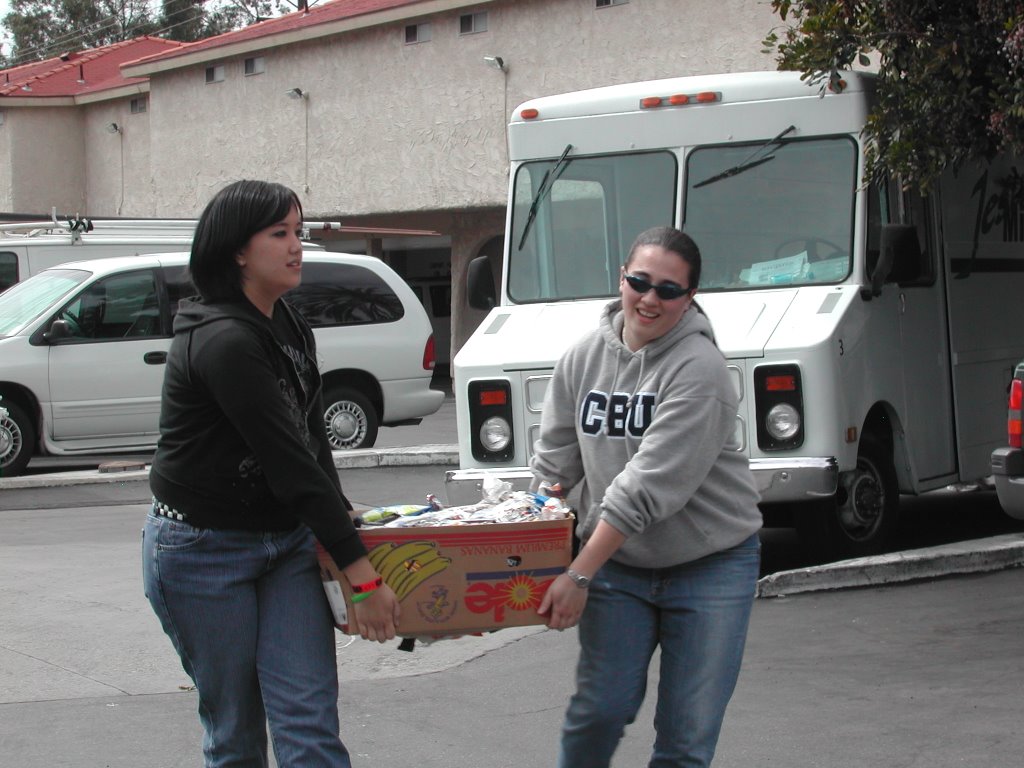
by Keith Giles
This is the final installment in our series on how you can start a ministry to the poor in your community.
If you have any questions, comments or ideas youd like to share please feel free to email them to me directly at:elysiansky@hotmail.com
**
MINISTRY TO THE HOMELESS – WHAT YOU NEED TO KNOW BEFORE YOU GO
Ministry to the classically homeless is much more challenging than you might think.
Our family has centered mainly on ministry to families who live in motels or to individuals who find themselves suddenly in danger of becoming homeless, or to the elderly.
Ministry to those who have lived on the streets for long periods of time, those I call "Classically Homeless", can be difficult. Here's some of why that is and what can be done to provide assistance.
WHY ARE THEY HOMELESS?
Many of those who live in a state of long-term homelessness are there because of drugs, alcohol or mental illness issues.
ADDICTIONS
For those who are homeless because of addiction and substance abuse issues, you should keep in mind that they will do whatever it takes to get money from you in order to get their drug of choice. Don't be surprised or offended if they lie to you. Don't be afraid to tell them you know they are lying (if you suspect it to be so). Honesty can go a long way and it helps them to know you're not easily fooled.
HOW TO HELP
Usually the best course of action to take is to help them with the condition in place that they seek out help for their addiction. So, if you buy them something to eat or if you put them in a hotel, etc. you let them know that next time your helping them will depend on whether or not they have followed through with getting off the streets and addressing their greater need to escape addiction.
MENTAL HEALTH ISSUES
Many of those who are living on the streets for long periods of time are dealing with mental health issues. Local mental health hospitals have the unfortunate habit of releasing residents who are not dangerous to themselves or to others due to over-crowding and a lack of funding. This puts many homeless on the streets who are not taking their medications and are suffering (not just due to hunger but also the pain of their illness) without any hope of getting better.
Communication with them can be difficult, if not impossible. Some cannot carry on a coherent conversation while others can appear lucid at first and then drift off into delusional behavior and display wild mood swings and unexpected changes due to their illness.
HOW TO HELP
In these cases I usually refer them, if possible, to a local mental wellness organization or to a non-profit that is more adept at treating people like this since it's very far outside my area of expertise.
Of course, not all of those who are homeless are mentally ill or struggling with addictions. Some of them have emotional issues and others have simply fallen deeper into the pit of poverty due to a loss of employment or other unexpected event.
CHALLENGES
Ministry to the classically homeless is much more difficult to do as a family due to the erratic and sometimes frightening behavior which can be encountered. Our family has focused mainly on ministry to the elderly and to families living in motels or in low-income housing since its something we can do with our children. However, there is plenty of great ministry to be done with those who are living in long-term homelessness. This will usually involve a more specialized skill-set and typically requires a person have lots of patience and a high level of discernment.
MINISTRY TO PROSTITUTES – INTO THE REAL DARKNESS
I've only been out about four times to the streets here in Orange County to minister to women caught in prostitution. Most of what I've learned is based on research and several crushing episodes of utter, empty defeat and failure.
This ministry is easily the most challenging and "outside my comfort zone". It means entering a dark, dangerous world where you are an outsider and the level of commitment required is off the charts.
First, a little bit of background about the issue.
HARD TO QUIT
Most girls who are on the streets will either get off and back into a normal life in the first three months or it will be another ten years before they can escape this lifestyle. Why? Because the work is so repugnant and degrading, at first, that if they're ever going to escape it has to be in those first few months. Otherwise, they get trapped into this lifestyle through fear of their pimp and/or through dependence on the drugs their pimp supplies them with.
HOOKED BY FEAR AND ADDICTION
What keeps most girls on the streets is the fear of being abused or killed by their pimp, and/or their need to keep an expensive drug habit going. Their pimps usually get them hooked on drugs as quickly as they can in order to control them. They know that no other lifestyle would afford their girls the kind of money they need to keep the drugs flowing, so the girls are essentially trapped into this life of prostitution.
HUMAN SLAVERY
Another difficult and impossible situation is where you have forced prostitution through organized crime syndicates. Many girls are here from Russia, the Ukraine, Romania, Thailand, Cambodia, and other impoverished nations. Many were tricked into coming here and are kept here by the threat of harm to their families back in their home country. They cannot leave, even if they desperately want to escape, because to leave would mean the murder of their mother, father, siblings, etc.
It's very shocking to realize that human slavery is alive and well in the United States of America. Just about a year ago the Orange County Police Department broke up the largest human trafficking/forced prostitution ring in the history of this region. I remember it because it was just weeks before the Freedom Day on March 25th at Vanguard where hundreds gathered to protest slavery and bring attention to this very real problem.
America is the number one market for human sexual slavery. Anaheim, the home of Disneyland, is one of the largest markets for human trafficking in the Nation.
You can find out more information about this online at
STOPTHETRAFFIK.ORG
DIFFERENT TYPESYou'll encounter one of four different kinds of girls who work on the streets.
1)Street level- Normally these are homeless girls who have no pimp and work prostitution for the food and for drugs. It's purely survival and quick cash.
2)Weekenders- These girls come and work to support their children or save money for college or other reasons. They are healthy and generally wear clean, attractive clothing.
3)Circuit Girls- These girls work a circuit throughout California, Nevada, Florida, etc. They wear exaggerated clothing (very Hollywood-esque). These look the most like obvious prostitutes and are the easiest to spot.
4)Transvestite- A man who dresses like a woman to turn tricks. Some have had surgery and take hormones to round off the illusion. You think it would be easy to tell the difference. You would be wrong.
MINISTRY IDEAS
*Stay Up Late
Due to the nature of this ministry, to find the girls you need to be where they are, and that means on the streets between 12am and 4am. You're guaranteed to loose sleep over this ministry.
*Mixed Teams
If you go out you need to always stay in mixed teams of guys and girls. It's a bad idea for guys to go out alone, since they might be arrested for soliciting, and it's not safe for girls to go out alone either. Mixed groups of at least four people work best.
*Pray, Pray, Pray
Prayer is crucial since you are entering into the Enemy's camp. This is where the Kingdom of Darkness clashes with the Kingdom of God. Expect a lot of spiritual attack at home and during the ministry time.
*Bless Them
You mainly want to get to know these girls. As with other ministries weve discussed thus far, consistency is the key. Build a relationship. Buy them breakfast if they'll let you. Listen to their stories. Ask them what they need and try to meet practical needs.
*Gift Bags
One local ministry to prostitutes brings gift bags to the girls with make-up supplies, gift cards to shops and food stores, clothing stores, etc. It brings down their guard and allows you a chance to smile, bless them, find out their names and ask if you can pray for them.
*The Pimps
Believe it or not, getting to know these guys can be a significant part of the process. One ministry I know of actually spends a lot of time trying to help these guys change their lives and turn to Christ. If they do, the girls usually follow and the operation is shut down because the girls, and their pimp, have surrendered to Christ and are seeking to live a new life.
*Statistics
Sadly, 98% of the girls who are on the streets now will stay there, and die there. This means that out of every 100 girls you reach out to, only 2 of them will get off the streets and stay off.
For those who do get off the streets, the process means getting off the streets and then relapsing over and over again for a few years before finally, eventually, getting off the streets for life.
Of course, these statistics don't tell the whole story. Some girls get off and stay off in one shot, some leave after several years, others after only a few months. But you should know what you're getting into before you commit to such a challenging ministry.
GETTING THEM REAL HELP
If you encounter girls who are under 18 you should refer them to "Children of the Night" (if you have one in your area) or even the local police department. These are minors who need to be rescued from this lifestyle.
The challenge I've run into is the lack of resources for girls who are under 18, don't have a Driver's License, or a SS card. These are usually girls who are here illegally or runaways.
If the girl is over 18 you can send them to Teen Challenge and/or another drug and alcohol treatment center where their addictions can be addressed and they can receive spiritual guidance and emotional healing. Sadly, most non-profit groups will not accept a girl who is under 18. Go figure.
What is really needed to minister to these girls is a long list of resources:
*Trained counselors
*Free shelter
*Addiction treatment
*Job Training
*Free Child Care
*Healthcare access (for health checkups, STD's, etc.)
As I said before, the most challenging and overwhelming ministry I've ever known is ministry to prostitutes. Not for the faint of heart.
**
I know this series doesn't even come close to scratching the surface of this topic of serving the poor and the homeless and people in need. So, I do hope you will email me directly if you have further questions or response to this series of articles. Many of you have already asked me for permission to reprint them and use in your Church or ministry efforts. That's what these are for. I do appreciate knowing about where these are being used and how, but otherwise they're meant to help you to serve others more effectively.
Peace,
Keith
Saturday, February 05, 2011
HOW TO START A MINISTRY TO THE POOR IN YOUR COMMUNITY - Part 4 of 5


by Keith Giles
In our fourth installment in this series I wanted to share some specific ideas and insights about the kinds of ministry to the poor that you can initiate in your community.
I want to stress that most of these do not require a large budget, or a team of thousands. Most of these can be done with families, including children of all ages, and two or three adults who are willing to listen, love and share what they have with people in need.
IDEAS FOR MINISTRY TO THE POOR
*Lower-income families (Housing projects, apartments, motels, etc.)
*Motel Ministry (especially for kids and families)
*Food/Grocery Distribution
*Homeless Ministry (Hot Dogs in the Park)
*Senior Home Visitation
*Prostitute Ministry
*Single Moms/Widows (Free oil changes, yardwork, grocery assistance, etc.)
DETAILS:
*Lower-income families (Housing projects, apartments, motels, etc.)
This ministry works best when you get to know the management of the apartment or motel, etc. Explain to them that you're not there to preach or to promote your church. Disarm them with the idea that you really just want to bless people. Explain to them that your ministry will involve giving away free groceries (if possible) or hosting game times for the children (or puppet shows, crafts, etc.). Help them to visualize a monthly or bi-weekly carnival that they get to help bring to their residents. It makes them look like heroes and it gives you an opportunity to express the love of Jesus in tangible ways.
*Motel Ministry (especially for kids and families)
Essentially the same as above. I'd only add that befriending people is the key here. Pray for them. Listen to their problems. Find ways to help them that are practical. This should not be about money. It should be about helping them discover resources in your community, hooking up with other ministries doing work to help with education, rent, health concerns, etc.
Also, ask God to highlight one or two people or families that He wants you to focus on and love them with all you've got. Invite them to your house for pizza and a movie. Hang out with them. Learn to love them. This is where you realize that the real ministry is being done to you, not by you.
*Food/Grocery Distribution
Find a food bank nearby. Second Harvest is a national food bank, but you may have another in your area. Our small house church can purchase a week's worth of groceries for twenty or thirty families for under $100 a month.
As I've said previously, don't distribute the food after you preach. Just give them the food up front and bless them. Ask them at the end of the food line if they want prayer. Most will say yes. If not, just smile and bless them as they go back into their rooms. Consistency is vital.
*Homeless Ministry (Hot Dogs in the Park)
Again, this is very cheap and it's more about getting to know people who happen to be homeless and less about throwing food at the poor and running home.
We found a park where a lot of homeless hang out that also had barbecue stations at each picnic table. Our group set up the grill, cooked the dogs, laid out the fixings and then fanned out to invite the homeless to join us for a picnic. We sat with them, ate with them, asked them their names, where they were from, etc. Even our kids enjoyed getting to know our new friends.
*Senior Home Visitation
You will not believe the treasures that are hidden away in the senior homes near your house. Former Generals in WW2, former actresses, singers, engineers, writers, and even regular people who have amazing stories to tell. All they need is someone to listen. Give it time and you will soon find yourself falling in love with these people.
*Prostitute Ministry
This one is waayyy outside my comfort zone, but I've been out around 3 times with small teams to try to connect and pray for these girls. I'll write in more detail about the challenges and dangers of this ministry next week. Not for the faint of heart.
*Single Moms/Widows (Free oil changes, yardwork, grocery assistance, etc.)
This is more of a Men's Ministry thing, but it can be awesome to bless single Moms and Widows who need assistance around the house, with the yard, the car, etc.
Oh, and it's Biblical too.
OTHER IDEAS FOR MINISTRY
*Local Newspaper/Community Response Ministry
This is one I've always wanted to do but have yet to attempt. Basically it involves reading the local paper and responding in compassion to people in your city who experience the death of a loved one, is the victim of abuse or rape or violence, tragedy, etc. This is one that I feel could have a huge impact on your community if your church or small group could consistently respond to people in need of comfort and prayer support.
*Community clean-up (graffitti cleaning, trash pick-up, etc.)
Steve Sjogren and Mike Pilavachi have championed this form of "no strings attached" service to the community. When I was at Soul Survivor I was involved with massive groups of teens taking to the streets and cleaning up parks, neighborhoods, etc. This may involve contacting city officials and cooperating with them to discover their needs and partner with their employees.
*Clean toilets for local businesses
Again, Steve Sjogren championed this one a long time ago. It's an amazing way to demonstrate the love of Jesus in practical ways to local business owners. Most will be blown away that you show up with a bucket and cleansers to do the ugly job that none of them wants to do. When you explain to them that you're doing it because Jesus washed feet and this is the closest thing in our modern society to that, you'll be amazed at the reactions you get. Worth it for the stories you get to tell later, if nothing else.
*Free Car Wash
Be careful. People will argue with you to take their money. They simply cannot bring themselves to receive a free blessing with no strings attached. Do it anyway.
NEXT WEEK: We'll finish off this series by looking at the specific challenges and dangers of working directly with the homeless and with prostitues.
[END OF PART 4]
Friday, February 04, 2011
HOW TO START A MINISTRY TO THE POOR IN YOUR COMMUNITY Part 3 of 5

This week's installment will continue to look at valuable lessons I've learned over the years. Next week we'll look at specific ideas for the types of ministry to the poor that can be done and a brief "How To" for each of them. After that I'll end off this series with more detailed discussions of what ministry to the homeless and to prostitutes looks like, and the specific challenges involved with each.
For now, here's the rest of the list we started last week:
A long list of valuable lessons
*You Will Get Back More Than You Give. Everytime. - I used to drive away from our various ministry sites feeling depressed. In my heart I always felt like we could have done more to help, or that I was desperately inadequate to meet the incredible needs of the people we were in relationship with. After awhile I began to understand that this is part of what it's all about. I also began to realize that the blessing I was taking home with me was always greater than the one I had just brought to the people we were in ministry to. No matter how massive or outrageous our ministry was, I always felt like it wasn't enough..and it never would be enough. Part of what I learned was how to be ok with this.
*You Can Only Help People Who Want Help - There's a great passage in the Gospel where Jesus comes upon a man who is laying beside the Pool of Siloam. He is lame and obviously in need of healing. However, Jesus looks at this man and asks him, "Do you want to be made well?" It seems, at first, like a very stupid question. However, in my years of ministry with the homeless and the addicted and the broken, I have been amazed at how many of them don't really want to be made well. For some of them, if I were to reach out my hand and take away their addiction, or their poverty, or their infirmity, they would hate me for it. Sometimes you have to ask people if they're really looking for healing or not.
*Some People Only Want Help Staying The Way They Are, Not Help Getting Better -Honestly, I'm a push-over. If someone asks me for food or money or assistance I have a hard time saying "No" and turning them away, especially if it's in my power or ability to do something. I think it has something to do about the Lord Jesus saying, "Give to anyone who asks of you expecting nothing in return" (Matthew 5:42). So, I will almost always help someone who comes to me for help...the first time. However, I've learned to help them further by saying, "Here's food/shelter/money/assistance for tonight, but what about tomorrow and next week? You need a long-term solution to your problem. Here's a few phone numbers to call. These people can help you make long-term changes and get off the street/off drugs/self sufficient/healing/counseling, etc."
The next time I see them, if they ask for help again, I will ask them, "Did you call those numbers I gave you last time?" and if they say "No" then I explain that the reason I'm not helping them today is because they didn't take any steps towards helping themselves in the long-term. Another response is to help someone financially with the understanding that they need to agree to sit down and allow us to help them create a budget to live on. If they agree, we help them. If they don't then we've established the terms under which were willing to help them out. However, sometimes I do just hand them food or money or pay their rent without any conditions attached. It depends on the person, the situation, and a bit of discernment.
*Be Prepared To Welcome The Poor Into Your Church, Your House, Your Family, and Your Life - I usually caution people who come to me asking how to start a compassion ministry with this statement: "If you're not willing to sit next to these people in Church on Sunday, or to have them play with your kids, or to invite them over for pizza afterwards, then don't start a compassion ministry." Nowadays I usually just let them get their feet wet and after they've been doing it a while I'll suggest that this ministry is more about loving people and less about an outreach. Outreach implies going out to accomplish something. It keeps the poor "Out There" and that's not what Jesus modeled for us. If we're going to step out and demonstrate to people that Jesus Loves Them it has be consistent. It has to mean "We love you too," otherwise what we're really saying is "Jesus loves you but we're not too comfortable around you. Stay out here and we'll come back next month and minister to you again." This isn't the Gospel and we can damage the true power of the Gospel if we say one thing and model another.
*Change Is Difficult - As you begin to minister to people who are homeless or living in poverty you'll no doubt come across a few people who just can't seem to get the courage to take that big step towards escaping poverty. I've seen people, more than once, come right up to the point of escaping poverty only to run as fast as they can in the other direction. Here's what I've learned: Holding their hand is good, but doing it for them is a big mistake. Sometimes the psychological leap is too great. It's much easier to remain in the world they know than to take a big step and risk failure. Some people will need you to be there with them every little step of the way. It can be frustrating, but when they finally do escape their situation the celebration will be well worth it. Others will just not ever be able to take that test or apply for that federal aid or drive down to that learning center or make that phone call to the counseling center, no matter how much you hold their hand and urge them to take the step. Taking that step for them will ease your frustration in the moment, but unless it's their idea and they're ready to follow through with things, they'll just back out of things eventually anyway. Prayer is really your best weapon usually.
*Don't Withhold The Blessing - This is one of my big pet peeves in compassion ministry. I understand that everyone does things their own way, but nothing makes me more angry than to watch Christians withhold the food or the assistance, etc. until after people have sat through an hour long sermon or church service. The Gospel is expressed just as much in showing love and compassion without cost or agenda…maybe moreso. People understand love. They understand compassion. They appreciate sincere giving done without an ulterior motive. Just try it. It's incredibly powerful. Maybe if you bless them without strings attached they will WANT to know more about why you love them, and why you love Jesus.
*Listening Is The Best Ministry Possible - File this under "Bigger is not Better." When you boil it all down, people just need to know you really care about them. Listening to people is the most powerful way you can demonstrate real love to them. Spending time with people and really paying attention to them is the best ministry you can ever do, and it doesn't cost you a thing.
*Don't Forget The Poor Among You - I'm embarrassed to say I needed someone from my compassion team to point this out to me. Our church was so busy knocking ourselves out to minister to the poor in the community that we were neglecting the poor and the orphan and the widow and the single Moms in our very own congregation. Let the blessing begin in the Family of God. There are those among us who are also poor and need the love and the compassion of the Body. Don't forget them.
*Don't Use This Ministry As A Way To Market Your Church - File this under "Things that make me very angry". I've noticed a disturbing trend among some churches lately where ministry to the poor is seen as being trendy and hip. They treat compassion ministry as a selling point for their church because it makes them look cool and it looks great on their website and in their bulletin each week. However, caring for people in need is typically not what they have foremost in mind. It's marketing their church. This really ticks me off. So, when we first started our Compassion Ministry I told our team members that, although I wasn't forbidding anyone else, I would never wear one of our church t-shirts to our ministry events. "Why not?" someone would always ask me. Because I don't want them to ever see that t-shirt and say "Oh…that's why they're being so nice to us." In fact, recently we've been joined by another large mega-church at the motel. Although we've been there for five years now, this mega-church has been serving breakfast every other Sunday and setting up tents and chairs and tables and having an on-site Church service. Beause their presence is quite large, many of those we minister to often assume that we're from this mega-church. They will even end their prayers by saying, "And God bless the good people of **** Church" to which I always say, "Amen!" I love it that our specific church is able to bring Glory to Jesus and even favor to another local Church by serving these people. It's a great reminder that our service to these people isn't about making our church famous or competing with other churches. It's simply about modelling the love of Jesus for people.
*Don't think of it as "Outreach" but as Loving People - After awhile the word Outreach becomes a dirty word. To me, the word carries the connotation of keeping people at arms length. I prefer to refer to what we do as Compassion Ministry or Service or simply "Being with our friends". Even to call them "The Poor" in some ways puts them into a classification that is demeaning and de-humanizing. Whenever possible think of them as your friends. They are people. They have the same needs as you and I. Love them as Jesus loves you.
-kg
[End Part 3]
Thursday, February 03, 2011
HOW TO START A MINISTRY TO THE POOR IN YOUR COMMUNITY - Part 2
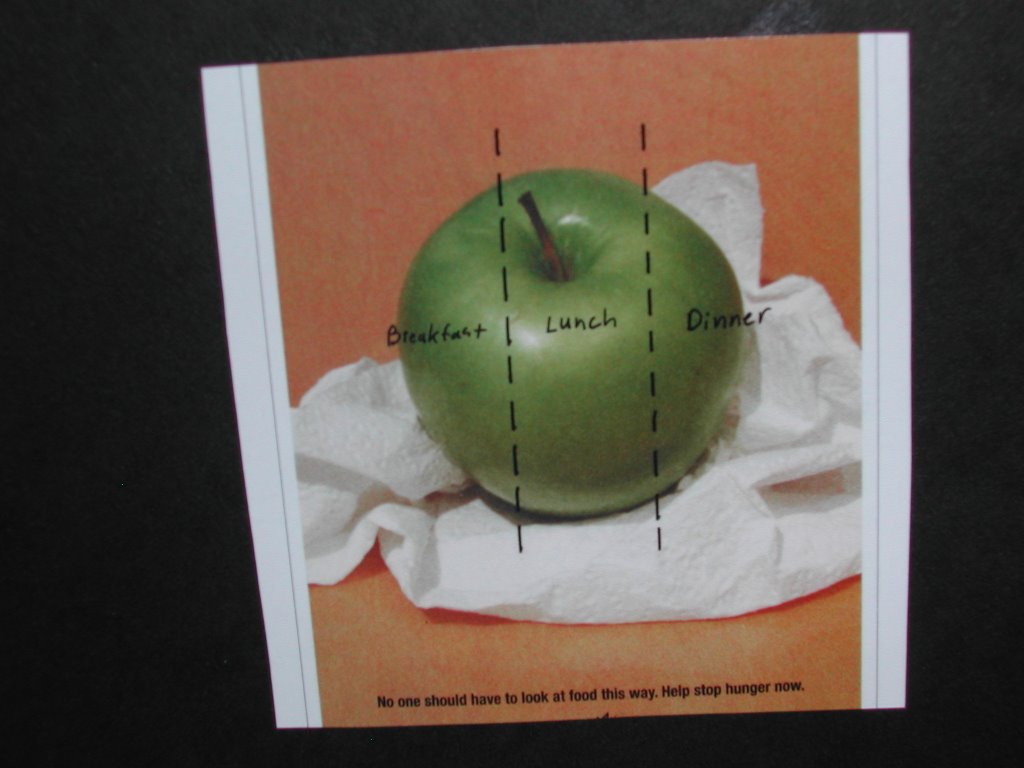
By Keith Giles
This week I want to share a long list of valuable lessons I've learned over the last few years when it comes to serving others. Keep in mind that a lot of what I learned here had to be experienced. Even as I share this with you I understand that reading about this is no substitute for actually experiencing it for yourself. Hopefully as you move forward in your own journey with serving people you'll discover the truth of these observations in your own heart.
A LONG LIST OF VALUABLE LESSONS
As you take your first tentative steps into compassion ministry, you'll need to know what to expect. Here are some basic things I've discovered in my journey serving others in our community:
*Consistency Is Vital - We started ministry at the motel in Santa Ana almost 8 years ago. Over time we've consistently come every month with a bounce house, games, snacks and a puppet show for the kids who live in this motel. For over four years we only blessed them. We never preached a sermon or passed out maps to our Church. (Although we weren't shy about sharing with them if they had need or if they asked us why were doing this for them.)
Recently, in our fifth year, we started passing out free groceries and asking them if we can pray with them about anything. Why? The goal of the ministry is to show the love of Jesus to them in tangible ways. Not to market our church or to get them to buy something. We have intentionally withheld a sermon or an evangelistic message so that we create the question in their minds- "Why?" We want people to respond to our compassion by asking "Why would you come out here and bless us like this every month?" When they ask us (and they eventually do) we then share with them the difference that Jesus has made in our hearts and lives.
Having no agenda disarms them and, more importantly, demonstrates that we really are only interested in loving them and blessing them in practical ways.
*You WILL Get Burned. It's Part Of The Process - A fellow compassion ministries pastor once suggested that we publish a guide to help local churches serve the poor. He wanted to include a section that would help prevent them from getting burned by some of the poor who take advantage of our goodwill. I protested against this quite vocally because the best lessons I've learned in loving the poor have come from the numerous times I've been played like a violin. Without those experiences of being lied to, taken advantage of and played for a fool I wouldn't have a shred of discernment regarding the poor. Getting burned is part of the process. Try to learn from it. The biggest challenge is to get burned and continue to love people and bless them, even knowing they might be playing you.
*Bigger Is Not better - For the longest time our ministry to the families in the motel was pretty much my wife, my two elementary-age sons and one other woman from our church. We still managed to put together great games for the kids, snacks, puppet shows and a meaningful ministry to the families who live in this motel. Sometimes having a massive ministry footprint means that the people you're ministering to get lost in the hype. I'd rather sit down and share a sandwich under a tree with one homeless guy than have a massive army of people running a huge event where the poor feel like outsiders.
*Don't Pet the Poor - Early on I was warned not to treat the poor as a project or an outreach. When we do this we end up treating them like people who are less than the rest of us. The goal in serving the poor is to make them feel like an equal human being. Look them in the eye. Laugh with them. Learn their story. Pray for them during the week. Get to know them. If you can think of your ministry as being more about making new friends (who happen to be living in poverty) and less about fixing these poor people you'll be fine.
*Don't Attempt To Cure Poverty In Your City - This is a common mistake for those who start off doing compassion ministry. In their zeal to bring justice to the poor they get off target and begin to see their ministry as a grandiose scheme to end poverty forever in their city. The sad thing is that when we do this we stop caring for the actual people who are in need. If our focus can remain on finding a few people and learning how to love them we'll be closer to the heart of Jesus. One of my early mentors, David Ruis, used to communicate it this way: "What do you see and what do you have?" Meaning, start with the people in front of you who have a need. Ask yourself what you have that you could share with them. Befriend people and learn to love them.
*It's About Sharing, Not Giving - Giving to the poor, although important is not what we're necessarily called to as followers of Jesus. We're called to share. Giving means writing a check and walking away (and taking the tax break on our IRS return). Sharing means taking something that is mine and giving it away to someone who needs it more than I do. That's an investment. That's also about friendship and relationship, not compassion from a distance.
*Befriend A Few and Learn To Love Them Deeply - When we first started our Motel Ministry I had grand visions of leading huge outreach teams to lead worship and preach the Gospel and rescue hundreds from the despair of poverty. God quickly corrected my vision and showed me one small family living in the motel. Love them, He said. Get to know them. Invite them to your house for lunch.
For the first two years or so that was the main focus of our ministry in that motel. The difference was that this ministry soon became less about ending poverty in that motel and more about the struggles of my new friends, Mike and Pam and their two children.
*You Will Learn More From Them Than You Teach - My relationship with the families at the motel has taught me more about courage and forgiveness and humility than I could have ever learned from reading a book or a blog or listening to a sermon. The things I've heard and seen and experienced by being in relationship with these wonderful people has impacted me greatly.
[END PART 2]
Wednesday, February 02, 2011
HOW TO START A MINISTRY TO THE POOR IN YOUR COMMUNITY

Part 1 of 5
Over the last several years I have been involved in serving the poor here in Orange County, California. During this time I have learned a lot about what to do, and what not to do, when it comes to serving the least and the forgotten.
In the upcoming series of articles I will do my best to provide practical insights and information about what serving the poor looks like. I hope to inspire many of you to step outside your comfort zones and begin to serve the poor in your own community.
Whether you volunteer at a local soup kitchen or if you lead a small group or a church team to go out and minister to the poor I hope you can benefit from these articles and catch a vision for serving others.
I am very excited about this new series of articles. My prayer is that this will inspire many of you to take first steps into an outward expression of God's love for others. I welcome your feedback and your questions as we take a few weeks to explore this subject and wrestle with these ideas.
BEFORE WE START
This series will not be about building a case for the "Why" we serve the poor, instead I will assume that most of you reading this have already come to terms with the overwhelming Biblical evidence regarding God's command to care for the poor and the example of our Lord Jesus towards the sick, the broken and the outcast.
It is my firm belief that, as a follower of Jesus, serving the least and the forgotten in our culture is expected of us. Jesus was our blueprint for living the Kingdom life. His example to us compels us to leave our comfort zones and to seek out the lonely, the forgotten, the least and the lost in our society. Jesus himself made it very clear that those who sincerely love him will be found caring for the hungry, the poor, the lonely and the imprisoned (see Matthew 25).
For more on the Believers Biblical mandate to care for the poor please refer to the numerous Scriptural references (over 2,000) concerning Gods heart for the poor and His expectation of compassion and obedience from us.
CATCHING THE VISION
So, with the assumption of an understanding regarding our personal calling to serve the poor and to love them as we love Jesus, (and as Jesus has loved us), I will try to share some of what I've learned over the last few years regarding God's heart for the poor and how we can step forward in obedience to care for them.
HOW DO WE BEGIN?
One of the first things I did when I realized that God was calling me to lead a ministry to the poor, (or Compassion Ministry), was to seek out other leaders who were already caring for the poor around me. There was a church in my neighborhood that hosted a weekly luncheon for the poor in their parking lot. I was also aware that they had started a Men's Shelter and opened a local Thrift Store to fund the ministry. After a few phone calls I got in touch with the pastor in charge of this ministry and took him to lunch.
Over a cheeseburger I took notes and asked a lot of questions. From there I took this pastor's advice and got in touch with the chaplain of our local rescue mission. A meeting with this amazing gentleman proved very insightful and provided further understanding of what poverty in our community looked like and how best to help.
FIRST STEPS
If you feel called to start a ministry to the poor through your church, or small group, or just want to get involved in some way, here's what I recommend:
*Understand that this is a Spiritual Battle - Some of the people you are about to minister to are trapped in the most unbelievable darkness you can possibly imagine. They are bound by drug addictions, sexual perversion, demonic possession, mental illness, physical sickness and more. You will need to recognize that you are not enough. You are perfectly inadequate in every way. You will need the power of the Holy Spirit. You will require a complete dependence upon God for help. You will not last a second without Jesus as your example, friend and constant strength. Pray.
*Don't reinvent the wheel - If there's already a dozen ministries in your area who are serving the homeless there’s no point in starting another one. Partner with them and work together.
*Find out what causes poverty in your community - In Orange County there are several non-profit organizations who conduct annual surveys and publish community index reports on everything from education and crime to employment rates and homelessness. A call to your local Rescue Mission and/or the area Salvation Army office can probably put these reports into your hands. Learning what the specific causes of poverty and homelessness in your community are goes a long way to providing
your next step. NOTE: If you live in Orange County, California you can visit www.PovertyInTheOC.com to find more resources and info to help you understand poverty in the OC.
*Become an expert in what causes poverty in your city - Soon you'll be teaching others about the problem, and the solutions. Because I've taken the time to study the causes of poverty in Orange County, I've had numerous invitations from local churches to come and share what I've learned. Part of my personal mission is to help others to see what I see and to catch a vision for serving the poor. This is a great way to do that.
*Piggy-back with others who have more experience and learn from them - When our group wanted to minister to prostitutes we did our best to find others who were experienced in dealing with this issue. When we felt called to minister in motels we partnered with the local Rescue Mission who was already organizing church groups to address the issue. Don't assume you know the needs, or the best methods for helping the poor. Every city is different. Every category of ministry (homeless, elderly,
veterans, prostitutes, drug addicts, battered women, etc.) is unique. Learn before you step out.
*Build a team who can serve with you - Don't start out alone.
Even if it's only one other person, you need to have a partner in this adventure. Pray together. Research the needs and brainstorm your approach to ministry.
*Don't blindly copy what someone else is doing - Every community is different, and I believe we need to begin caring for "our poor" first. The homeless or the low-income family in your area is not the same as the homeless or the poor in San Francisco, or New York or Chicago, etc. Take cues from others, but don't assume you can "cut and paste" what one ministry does into your community and be
successful.
*Start close to home - The poor who live within ten miles of you are "your poor" and getting to know them, and understanding their needs and what keeps them in poverty is crucial. Try not to do long distance ministry to the poor. Find ways to be in fellowship with those you are serving.
[END PART 1]
Monday, January 31, 2011
REMEMBER THE POOR

"All they asked was that we should continue to remember the poor, the very thing I had been eager to do all along." - (Galatians 2:10)
A few years ago I threw a small party at my house. One of my friends wanted to make something for everyone but we were out of a few special ingredients. So, my friend hopped in the car to go and buy what we needed at a nearby grocery store.
When my friend returned I met him at the door. "What took you so long?" I asked, and then I noticed that my friend wasn't wearing any shoes.
"Did you run out of here and forget your shoes?"
My friend came into the house and set the grocery bags on the floor. "No," he said.
I was confused. "How did you end up losing your shoes at the grocery store?"
My friend explained, "When I came out of the store I saw a homeless man digging through the trash outside in the parking lot, but I was in a hurry because I knew everyone was waiting for me to get back. I jumped in the car and made it almost to the street before I heard the Lord tell me to turn around. So, I backed up and parked the car and walked over to the man. I asked him if he was hungry and if he wanted me to buy him some food. He said, no thanks. So, I asked him why he was digging through the trash and he said he was looking for some shoes. I looked down at his feet and his shoes were ragged and torn. That's when I noticed, standing there beside him, that my feet were the same size as his. So, I took off my shoes and gave them to the man."
As my friend told this story to me, my eyes filled with tears of amazement. I couldn't help but wonder, "Would I have done that? Would I have taken off my shoes and given them to a stranger?"
The followers of Jesus are held to a higher standard of love than others. We're commanded not only to love God, and to love our neighbors, but to love those who don't love us, and to care for the poor, the orphan, the widow, and the stranger all the same.
My family has been reading through the book of Acts together in the morning before we start our day. It's been fascinating to see how people who were filled with the Holy Spirit of God and overjoyed about the coming of the Messiah couldn't help but share all that they had with one another out of love. When the scriptures tell us, that "...there was no needy person among them" (Acts 4:33-34) it doesn't mean that they didn't have any poor people in their church. Can we say the same of our churches today?
The word "Compassion" means "to suffer with". It means that when we see the pain of others, we are also in pain. We must care for them as we would care for ourselves.
This is why Jesus warns us that, at the Judgment seat of Christ, our love will be measured by how we responded to the poor God placed in our path. If we gave them food when they were hungry, or water when they were thirsty, or clothing when they were naked, or love when they were lonely, then it is counted as if we had done it unto our Lord Jesus Himself.
I've never given away my shoes to a homeless person. But, one day, I do hope that the Lord gives me an opportunity to put my shoes on His feet like this. Or perhaps, soon, I can buy him a cheeseburger, or something cool to drink the next time I see one of His representatives in the streets.
"Then the righteous will answer him, 'Lord, when did we see you hungry and feed you, or thirsty and give you something to drink? When did we see you a stranger and invite you in, or needing clothes and clothe you? When did we see you sick or in prison and go to visit you?' The King will reply, 'Truly I tell you, whatever you did for one of the least of these brothers and sisters of mine, you did for me.' - (Matthew 25:37-40)
-kg
Saturday, September 11, 2010
What Love Is

Remembering my friend, Robert Higgins who died on Friday, September 10th, 2010 at 9am.
Robert Higgins was born in Winchester, Kentucky on February 3, 1932 to a poor family. His father died when he was young and for a brief time he and his older brother spent time in an orphanage because his mother wasn't able to provide for them.
One day he and his brother were adopted out to other families and when his mom found out she fought hard to bring them all back together again.
Eventually, Robert moved to California where he worked for the post office briefly and even drove moving trucks for a time.
He met a woman named Rosa and they had two daughters and one son, Richard.
By the time I met Robert, he was estranged from everyone in his family. He was homeless and staying off and on in a motel in Santa Ana.
The more I got to know Robert the more I learned about his struggle with faith. He was angry at God for how his life had turned out. He'd had a hard life and most things hadn't worked out for him the way he had hoped they would.
If there was a theme around Robert's life it was love. He told me once that it was hard for him to receive love from others because in his experience everyone always expected something in return for that love. There were always strings attached, so he learned to mistrust those who acted like they loved him.
Robert's favorite song was "I Want To Know What Love Is" by Foreigner. He only owned one CD when I met him, FOREIGNER'S GREATEST HITS. He never listened to anything else on that collection. Just track one, his favorite song, and then he'd eject the CD and put it back in the case.
The cry of Robert's heart was to know what love is, and he really did want someone to show him if it was real.
About a year ago Robert was diagnosed with bone cancer. He eventually ended up at Fountain Care center just a few blocks away from my house. I used to drop by and see him most days on my way home from work. During our visits he would talk about how so many people in his life used to show him special attention and favor. People at the homeless shelter, barristas at the coffee shops, managers at the motels he stayed at, managers at gas stations where he bought his cigarettes - all of them took special time with Robert and gave him preferential treatment.
"That's God showing you His love, Robert," I said to him. "It's as if God put a spotlight on you and prompted all those people to pick you out of the crowd and show love to you." Robert nodded his head in agreement.
When Robert was admitted to Fountain Care he was placed in room number 316 with a Romanian man who only knew a few phrases in English. The main thing he would say to everyone who entered the room was, "I love you, everyday."
A few weeks ago, before Robert passed away, I pointed this out to him. "Robert, do you know what room number you're in?"
"Room 316" he said.
"Yeah. Do you know why God put you in room 316? Because it reminds us of John 3:16 where Jesus says, 'For God so loved the world - that's you Robert - that He gave His only begotten Son, that whoesoever believeth in Him should not perish but have everlasting life.'"
Robert nodded silently.
"God also gave you a room mate who can't speak English. All he can say, all day long, is 'I love you, everyday.' Isn't that awesome? God wanted you to be reminded, everyday, that you are loved," I said.
Two weeks ago, one of Robert's good friends at Fountain Care died suddenly. I spent some time that same night reading to Robert out of the book of Romans. I told him I needed to know that he would be with Jesus when it was his time to die.
Since I was always spending time with Robert, many of the people at Fountain Care assumed that I was his son. They would ask me how my Dad was doing, or they'd ask Robert about me assuming I was his son.
About a week ago, as our family was visiting Robert, one of his friends there brought this up and she told my wife that Robert had said that he loved me like a son, and that he wished that I was his son.
Last week, when Robert was near the end, I took his hand and I said, "Robert, God knew that your real son couldn't be here for you the way he wanted to. So, he sent me to be your son and to love you and comfort you in his place. But, God also sent you His real Son, Jesus, to give His life for you and to demonstrate His love for you."
Two days before Robert died, I stood next to his bed. We were surrounded by four other dear friends who had also loved and served Robert in the name of Jesus. We talked and laughed about our memories of being with Robert. We all agreed that we were Robert's family and that we loved him.
The day before Robert died, I sat beside him as he lay quiet. The morphine and the Atavan kept him sedated, but the nurses assured me that he could hear what I was saying. So, I took out his CD player and I played his favorite song. I took his hand and reminded him that God had already shown him what love is. That love had a name and that his name was Jesus.
After I sang a song to him and read Psalm 23, and Zephaniah 3:17 to him, I took his hand and I said,"Robert, will you pray with me?" and I lead him through a prayer of confession and faith in Christ. Of course, he wasn't responsive so I don't know if he really heard me or not.
I prayed that night, as I did most nights, for God to give me some kind of confirmation of Robert's salvation. Just one minute of lucid consciousness with him was all I wanted. Just to know that he had really made peace with God and accepted the love of Jesus. That was my prayer.
The next morning, on September 10th, at 9am Robert passed away in his sleep.
One of the women who had served Robert during all this time was Kathleen. When I called to let her know that Robert had passed away, she told me that she had been praying for Robert and wondering if he had really received the love of Jesus or not. "I felt like the Lord gave me a word about Robert," she said. "He reminded me that all of us who served him did it in the name of Jesus. At first, Robert resisted our love and God's love. Remember how he used to fight us and argue with us? But eventually Robert's heart softened and especially near the end he was very accepting of the love we showed him. He was thankful for it and he received that love of Jesus from us. So, in that way Robert did receive the love of Jesus and I believe he really did have that conversation with Jesus in his heart."
Through my tears I thanked Kathleen for this assurance. I needed it so much.
Robert Higgins, my dear friend, was a man who never knew what love was until some people he never met before began to demonstrate it to him. They all did this because Jesus first loved them and gave Himself to save them. Jesus changed their hearts and filled them with the patience needed to love a cranky, difficult man like Robert, who eventually softened under the endless barrage of God's mercy and grace and love.
Today, Robert Higgins knows what love is. He is looking deep into the face of love and he is full of joy and peace.
I'm so thankful to God that He allowed me to be one of those many, many people who He deputized to demonstrate His love to Robert Higgins. Through this journey with Robert, I also learned what love is and I will never forget this lesson, or this dear, sweet friend.
-kg
Saturday, July 17, 2010
ARE YOU IMMUNE?
There are 700,000 child slaves in Indonesia alone. There are over 200,000 child soldiers in Uganda. There are 35,000 homeless in Orange County, California. 80% of those are families with children.
Why don't we care enough to change the world we live in?
A recent quote from artist and activist Milton Glaser noted that it becomes harder and harder to provoke Americans to act for justice because, as he says, "Americans are immune to outrage".
I have to wonder how we in American have become passive in the face of injustice and atrocity? Our Nation was founded by individuals who took up arms to protest an unjust system of "Taxation Without Representation". They were incensed and spurred to action because of a 4% sales tax that yielded no representation for the 13 Colonies in Parliament. Yet today, their descendants and the inheritors of their spirited revolt are quietly reserved to pay over 30% of their income to the United States Government each year and most have no faith that elected officials will fairly represent the true needs of the people they serve.
I'm not advocating a new revolution against our Government, but I am puzzled as to how we've become immune to the sort of outrage that helped found our Nation in the first place.
William Wilberforce fought the British slave trade in his day. After spending his life arguing for abolition and lobbying in Parliament for the immediate end of this inhuman practice he finally found victory on March 25th, 1807. He died three days later, his life's work completed.
Why did Wilberforce believe he could stand up to the powerful slave industry giants and succeed? Why did Luther believe he could take on the Universal Church of his day and prevail? Why did Martin Luther King Jr. believe he could overcome generations of hatred and bigotry and change the hearts and minds of an entire Nation?
Why don't we believe these things? Do we believe in anything enough to risk our lives, or our families or our careers to stand up and speak out? Are we too comfortable in our own little world that we cannot be bothered to experience sincere compassion, or moral outrage, at the exploitation of other human beings? Is it because they are far away? Is it because they are not American? Is it because we don't believe our voice will make any difference?
A dear friend of mine once admitted to me, "I don't care about the poor, and honestly what bothers me most is that I don't care that I don't care about the poor."
What is the cure for apathy? How do you provoke people to become outraged at their own lack of outrage? How do you inspire people to protest against their own lack of concern? What sort of hope is there for hopelessness? Who can awaken the one who does not wish to be awakened?
I often wonder why it is in America that we have made a multi-billion dollar industry out of escaping reality. We are the entertainment capital of the world. Yet, I cannot help but imagine what could happen if we were to spend those same billions of dollars on creating a world where reality was a place you didn't need to escape from?
Why don't we respond to the injustices of the day? Is it because we have no clear direction, no specific steps to take? Is it because we have no great leaders to show the way? Is it because we don't believe that our lives can make a difference? Or is it because we are too comfortable where we sit?
Where are the Wilberforces of today? Where are the Martin Luther Kings or the Ghandis or the Mother Teresas? For that matter, where are those who call themselves disciples of Jesus?
Why can't it be you or me? Aren't we ambassadors of the greatest world-changer who ever lived?
For me, to be a Christian is to be an activist. This is what "Subversive" is all about. It's about provoking others to change the status quo of their lives in order to follow in the radical life and love of Jesus of Nazareth.
To be a Christian is to be an activist.
In what way could someone call themselves a follower of Jesus and be anything other than someone who brings change in their wake? How else is a person who names the name of Christ to act?
In my mind, to be a follower of Jesus is to be one who sees things as they are and work to bring the Kingdom of God in order to make things better.
Looking at Matthew 25, it would seem that the kind of followers Jesus is looking for are the ones who are incapable of walking past the poor without doing something to help. When they see someone hungry, they give them food. When they see someone thirsty, they give them a cold cup of water. When they see someone who is lonely, they stop and spend a few hours with them.
“For whatever you've done for one of the least of these”, says Jesus – our example and teacher – “You've done it unto me.”
Jesus was a radical. He raised up a small army of revolutionaries with the sole "raison d'etre" of changing the world and turning it upside down. In their wake, the early followers of Jesus, left changed governments, changed religious systems, and changed hearts and minds.
If the early church had simply existed, if it had only found a way to blend in with the culture around it and become safe and acceptable to the populace, you and I might not ever have heard of a person by the name of Jesus of Nazareth who, about 2000 years ago, gave his life to change the world, one person at a time.
The church today needs to become more like its founder. It needs to be driven to press forward, out of its comfort zone, to get its hands dirty, to move in such a way that our words line up with our actions. To do any less is settle.
Who wants to belong to a predictable movement? Who wants to surrender their life for something ordinary and unremarkable?
Many of us are willing, we say, to die for Christ. The question is, are we willing to live for Christ?
When it comes to outrage, I believe a Christian needs to be constantly spurred to action against injustice and poverty.
Are you immune?
-KG
"And let us consider how we may spur one another on toward love and good deeds"
– Hebrews 10:23
**
Originally published April, 2007
Why don't we care enough to change the world we live in?
A recent quote from artist and activist Milton Glaser noted that it becomes harder and harder to provoke Americans to act for justice because, as he says, "Americans are immune to outrage".
I have to wonder how we in American have become passive in the face of injustice and atrocity? Our Nation was founded by individuals who took up arms to protest an unjust system of "Taxation Without Representation". They were incensed and spurred to action because of a 4% sales tax that yielded no representation for the 13 Colonies in Parliament. Yet today, their descendants and the inheritors of their spirited revolt are quietly reserved to pay over 30% of their income to the United States Government each year and most have no faith that elected officials will fairly represent the true needs of the people they serve.
I'm not advocating a new revolution against our Government, but I am puzzled as to how we've become immune to the sort of outrage that helped found our Nation in the first place.
William Wilberforce fought the British slave trade in his day. After spending his life arguing for abolition and lobbying in Parliament for the immediate end of this inhuman practice he finally found victory on March 25th, 1807. He died three days later, his life's work completed.
Why did Wilberforce believe he could stand up to the powerful slave industry giants and succeed? Why did Luther believe he could take on the Universal Church of his day and prevail? Why did Martin Luther King Jr. believe he could overcome generations of hatred and bigotry and change the hearts and minds of an entire Nation?
Why don't we believe these things? Do we believe in anything enough to risk our lives, or our families or our careers to stand up and speak out? Are we too comfortable in our own little world that we cannot be bothered to experience sincere compassion, or moral outrage, at the exploitation of other human beings? Is it because they are far away? Is it because they are not American? Is it because we don't believe our voice will make any difference?
A dear friend of mine once admitted to me, "I don't care about the poor, and honestly what bothers me most is that I don't care that I don't care about the poor."
What is the cure for apathy? How do you provoke people to become outraged at their own lack of outrage? How do you inspire people to protest against their own lack of concern? What sort of hope is there for hopelessness? Who can awaken the one who does not wish to be awakened?
I often wonder why it is in America that we have made a multi-billion dollar industry out of escaping reality. We are the entertainment capital of the world. Yet, I cannot help but imagine what could happen if we were to spend those same billions of dollars on creating a world where reality was a place you didn't need to escape from?
Why don't we respond to the injustices of the day? Is it because we have no clear direction, no specific steps to take? Is it because we have no great leaders to show the way? Is it because we don't believe that our lives can make a difference? Or is it because we are too comfortable where we sit?
Where are the Wilberforces of today? Where are the Martin Luther Kings or the Ghandis or the Mother Teresas? For that matter, where are those who call themselves disciples of Jesus?
Why can't it be you or me? Aren't we ambassadors of the greatest world-changer who ever lived?
For me, to be a Christian is to be an activist. This is what "Subversive" is all about. It's about provoking others to change the status quo of their lives in order to follow in the radical life and love of Jesus of Nazareth.
To be a Christian is to be an activist.
In what way could someone call themselves a follower of Jesus and be anything other than someone who brings change in their wake? How else is a person who names the name of Christ to act?
In my mind, to be a follower of Jesus is to be one who sees things as they are and work to bring the Kingdom of God in order to make things better.
Looking at Matthew 25, it would seem that the kind of followers Jesus is looking for are the ones who are incapable of walking past the poor without doing something to help. When they see someone hungry, they give them food. When they see someone thirsty, they give them a cold cup of water. When they see someone who is lonely, they stop and spend a few hours with them.
“For whatever you've done for one of the least of these”, says Jesus – our example and teacher – “You've done it unto me.”
Jesus was a radical. He raised up a small army of revolutionaries with the sole "raison d'etre" of changing the world and turning it upside down. In their wake, the early followers of Jesus, left changed governments, changed religious systems, and changed hearts and minds.
If the early church had simply existed, if it had only found a way to blend in with the culture around it and become safe and acceptable to the populace, you and I might not ever have heard of a person by the name of Jesus of Nazareth who, about 2000 years ago, gave his life to change the world, one person at a time.
The church today needs to become more like its founder. It needs to be driven to press forward, out of its comfort zone, to get its hands dirty, to move in such a way that our words line up with our actions. To do any less is settle.
Who wants to belong to a predictable movement? Who wants to surrender their life for something ordinary and unremarkable?
Many of us are willing, we say, to die for Christ. The question is, are we willing to live for Christ?
When it comes to outrage, I believe a Christian needs to be constantly spurred to action against injustice and poverty.
Are you immune?
-KG
"And let us consider how we may spur one another on toward love and good deeds"
– Hebrews 10:23
**
Originally published April, 2007
Friday, June 25, 2010
CHRISTIAN IMMIGRANTS

These days it seems that Americans are becoming more and more polarized over the issue of illegal aliens and their impact on our economy. What I find most sad is how many followers of Jesus are siding with their political party on this issue rather than taking God’s Word into consideration.
In Exodus 22:21 God says, "Do not mistreat the alien or oppress him, for you were once aliens in Egypt". Doesn't that mean that God expects His people to show compassion and love to those who live as strangers among us? Even those who are – in the same way that the Jews were in Egypt – oppressed, mistreated, abused, and treated as slaves should receive special treatment from the people of God.
In any debate, we should find ourselves always on the side of the weak, and the oppressed, not on the side of the rich and the strong and the powerful. Jesus set us an example. He was a friend of sinners. He was found hanging with drunks and prostitutes and lepers. We should be found where Jesus was found most often – among the oppressed and the forgotten.
"Live in harmony with one another. Do not be proud, but be willing to associate with people of low position." – Romans 12:16
Someone once suggested to me that it would be appropriate for Churches to issue Green Cards to new converts immediately after baptism in order to remind them that they are resident aliens in this World.
Jesus agreed with this idea of Christians as immigrants when he said, "My prayer is not that you take them out of the world but that you protect them from the evil one. They are not of the world, even as I am not of it." (John 17: 15-16)
Followers of Jesus need to align themselves more closely to the outcast, the poor, the sick, the illegal alien, and the elderly. We should befriend those who are dying of cancer. We should comfort those who are suffering from aids. We should have more in common with the weak in our society than with the strong.
We are not of the world, any more than Jesus was of it. So, why do we continue to support the power structures of this world?
Obviously, these words from Jesus suggest that we need to examine our own materialism, our pursuit of fame, our desire for money and our love of self. But I also believe that this verse says something about our basic sense of identity.
As we argue over the dinner tables – or the blogsphere – about these issues of immigration reform and the laws being passed in Arizona against illegal aliens, I am disturbed to hear no Christian voices speaking out about our need to see ourselves in the faces of those who are oppressed.
The truth is that we are more like these resident aliens than we realize. These people are – like us – strangers and aliens in this place. So, why are we not out there marching alongside them, asking for them to be treated fairly and seen as worthy human beings who deserve the same chances we've been given?
I will admit, this is an especially difficult issue for people of faith. On the one hand we have laws of the land that should be enforced, but at the same time we have people who are working harder than we are, doing things most of us would not do, for less money than we would ever consider working for, and paying taxes and social security that others will enjoy and they will never collect. Where is the greater injustice being done? Does anyone defend this injustice with the same passion as they defend the rights of the middle class or corporations?
As followers of Jesus, this is not a political issue for us. I know for many others that this is purely a political issue. But, for us it cannot simply be a Republican or a Democrat debate. We have to look to our Lord and our Master. We must consider the code of the Kingdom of God which is our true home, not the party line or the American way. We are the descendants of a Body that has always been counter cultural and Kingdom-minded. Our vision must be focused clearly upon Jesus our King and our feet must walk where He walks.
Again, this isn't about your political opinions or attitudes as much as it is about how you - as a follower of Jesus - actually put your faith into practice.
The Church today is more American than Christian. We are largely unable to divorce our faith from our nationalism. This, to me, is very troubling because it means that we are unable to understand Jesus and His teachings apart from our own cultural context.
To help American Christians understand how this Americanized Christianity can blind us I have often tried to ask followers of Jesus to realize that the vast majority of our brothers and sisters on the Earth are not living in America. This means that many of them are following Jesus in nations like Korea, Africa, Russia, China, and other countries with radically different political ideas. So, if someone comes to Christ in China, for example, does that mean that they also – upon receiving Jesus – suddenly become a Capitalist? Of course not. The decision to surrender your life to Jesus and follow His teachings and example does not make you an American. We have to try to conceptualize - and practice - our faith apart from our patriotism.
We have to begin to admit the possibility that one can be a Christian without pledging allegiance to the flag, or the nation for which it stands. In fact, I believe that we must strive to see Jesus as clearly as possible - apart from our cultural, political and nationalistic filters. I also believe that our posture towards the poor and the outcast should be modeled after our Lord Jesus, not out of some political worldview.
Our hope – as followers of Jesus – is in the power of the Gospel to change hearts. It is not in the power of politics to legislate morality and create a Theocracy.
Jesus told us, "If you belonged to the world, it would love you as its own. As it is, you do not belong to the world, but I have chosen you out of the world. That is why the world hates you" (John 15:19).
This verse is especially troubling to me. It makes me ask myself, "Does the World hate me?" or even worse, "Do I hate the World?" Now, I don't mean "hate" in the sense that I should hate other people, but do I hate the system, the consumerism, the focus on the flesh rather than the spiritual? Do I hate it when I see the stranger and the alien in our land being oppressed and mistreated? Does it cause me to remember that I am also not of this world?
"You adulterous people, don't you know that friendship with the world is hatred toward God? Anyone who chooses to be a friend of the world becomes an enemy of God." (James 4:4)
The Governments of this planet are of this world, they are not of God. Our allegiance is to Jesus alone. His Kingdom is our only true homeland.
We, as followers of Jesus, should be comfortable among the ranks of the misunderstood, the hated, the outcasts and the despised. We should go out of our way to embrace those who are, like us, on the margins of this world. That means the poor, the prostitutes, the unpopular, the prisoners, and yes, even the undocumented immigrant.
Even if we cannot bring ourselves to skip work and carry a sign of protest in the streets to show our support, perhaps we could at the very least offer up a word of prayer to ask God to bless these aliens in our midst? Perhaps, eventually, we might even come to see these people as fellow outcasts and unwanted immigrants who are more like us than we might think.
Are you a follower of Jesus? Can I see your Green Card?
-kg
Monday, June 07, 2010
Make Me A Servant
Followers of Jesus remember only the needs of others and the example of Jesus humble service. No task is is beneath those who emulate the Messiah. No person is disqualified from receiving mercy and grace. There is no level too low for us to bend our knees in service.
Our amazing God has overwhelmed us with His humility. The creator of the universe became our servant, took on human form and suffered in our place. He submitted to us, and therefore we can do no less than submit ourselves to Him, and to make ourselves available to serve anyone in our path.
God's plan was to change the world with love. The love He showed us was extravagant. It wasn't based on merit. Those who deserve love the least are the very one's who need it the most. Therefore, our calling is to make ourselves low, humble ourselves, and repeat the question that Jesus Himself asked more than any other - "What would you have me to do for you?"
Freely we have received immeasurable grace from His hand. Freely we are compelled to give love and grace without measure.
God, please help us to be conduits of your love to others in this world who have never seen or experienced the quality of love you have shown to us.
Make us like you - a servant of all.
-kg
"Make Me a Servant"
by Kelly Williard
Make me a servant
Humble and meek
LORD let me lift up those who are weak
And may the prayer of my heart
Always be
Make me a servant
Make me a servant
Make me a servant, today.
*See Philipians 2
Our amazing God has overwhelmed us with His humility. The creator of the universe became our servant, took on human form and suffered in our place. He submitted to us, and therefore we can do no less than submit ourselves to Him, and to make ourselves available to serve anyone in our path.
God's plan was to change the world with love. The love He showed us was extravagant. It wasn't based on merit. Those who deserve love the least are the very one's who need it the most. Therefore, our calling is to make ourselves low, humble ourselves, and repeat the question that Jesus Himself asked more than any other - "What would you have me to do for you?"
Freely we have received immeasurable grace from His hand. Freely we are compelled to give love and grace without measure.
God, please help us to be conduits of your love to others in this world who have never seen or experienced the quality of love you have shown to us.
Make us like you - a servant of all.
-kg
"Make Me a Servant"
by Kelly Williard
Make me a servant
Humble and meek
LORD let me lift up those who are weak
And may the prayer of my heart
Always be
Make me a servant
Make me a servant
Make me a servant, today.
*See Philipians 2
Friday, April 30, 2010
WORTHLESS?

Last week I had lunch with my friend, Robert Higgins. Every Friday he and I spend an hour together and share lunch in his room at Fountain Care.
Robert is 78 years old. He has bone cancer. He is on Hospice Care now.
When I first met him he was homeless. The manager of the motel in Santa Ana where we've been serving introduced me to Robert. When Pete, the manager, called me on my cell phone about a year and a half ago he asked if our house church could help Robert get into one of the rooms at the motel on a regular basis. Robert was sick and, at the time, it was winter and a cold rain had settled over Orange County. Pete told me, "Keith, if I send him back out in this weather I'm afraid he won't live through the night."
So, we helped Robert to get into the motel room. I visited him now and again to check up on him and make sure he was taken care of. This was before we knew about his bone cancer.
Over the last year or so I've learned a little about Robert's life growing up. I've listened to him share stories about his own mistakes with his children and his marriage. I've watched him share about his failures and his regrets with tears in his eyes.
One thing about Robert that seems to keep recurring is his low self esteem. He's always talking to me about how he's not worth anything and how no one in his life ever saw much good in him.
Last Friday, as we shared lunch together, Robert made me laugh out loud. He was talking to me about his time on the street and how his other homeless friends would chide him for not carrying a sign - "Homeless. Will work for food." Robert refused. "They told me I needed to swallow some of my pride," he said. "I said, naw, naw, as long as I'm able to work I'm not gonna stand on a street corner and beg for money."
Robert said there was one time in his life when he did consider carrying a sign. "When I was really depresed and suicidal," he said, "I did think about making a sign and carrying it around that said, 'Homeless. Worthless. Please shoot me.'"
I confess that when Robert said that to me I laughed out loud. Actually, we both laughed pretty hard about that, but I knew what he was telling me came from a place of real pain in his heart.
Slowly, over the last several months, I've been able to encourage Robert about his worth. I've reminded him that God has placed a large group of people around him who really love him and value him. "It's like God has put a spotlight on you, Robert. People just seem to pick you out of the crowd and give you special attention," I said. Robert's eyes filled with tears and he nodded. "You're right," he said. "About the last year, once I met you and Pete, it's like you said, people seem to pick me out of the crowd and show me special attention."
I waited until Robert composed himself and then I said, "That's God showing you that He loves you, Robert. He's put all these people in your life to let you know He sees you and He loves you. He hasn't forgotten you."
Still, I know that Robert hasn't fully let go of his feelings of worthlessness yet. He's beginning to accept that his life has value, but there are still years of verbal abuse and manipulation for his heart to overcome.
When I was young I used to collect comic books. I would read them with gloves on and seal them in plastic bags to preserve their value. One day my Dad said something to me that I'll never forget. We were talking about how one of the comics I owned was valued at $200. He smiled and said, "Son, that comic is only worth $200 if you can find some chump who's got the money and is willing to give it to you."
It's true. It doesn't matter what price tag someone puts on an item. The real value of that item is in what someone is willing to pay for it.
"For you know that it was not with perishable things such as silver or gold that you were redeemed from the empty way of life handed down to you from your forefathers, but with the precious blood of Christ, a lamb without blemish or defect." - 1 Peter 1:18-19
What price was Jesus willing to pay for you to be with Him? How much worth do you have to Him? According to His Word, you are worth suffering for, and bleeding for, and dieing for.
"You are not your own; you were bought at a price." - 1 Cor 6:19-20
In God's eyes, you are not worthless. You are not stupid. You are not a failure. You are precious beyond measure to the Creator of the Universe and He would rather die than be without you.
"How great is the love the Father has lavished on us, that we should be called children of God! And that is what we are!" - 1 John 3:1
-kg
Subscribe to:
Posts (Atom)