My name is Keith Giles. I love to write so that people can know Jesus and experience His life in their own. So, I started this blog to help people understand who Jesus is, and how He reveals what the Father is really like. This is a safe place to talk about all those questions you've had about the Bible, and Christianity. It's also a place to learn how to put the words of Jesus into practice.
Showing posts with label jesus unbound. Show all posts
Thursday, September 21, 2017
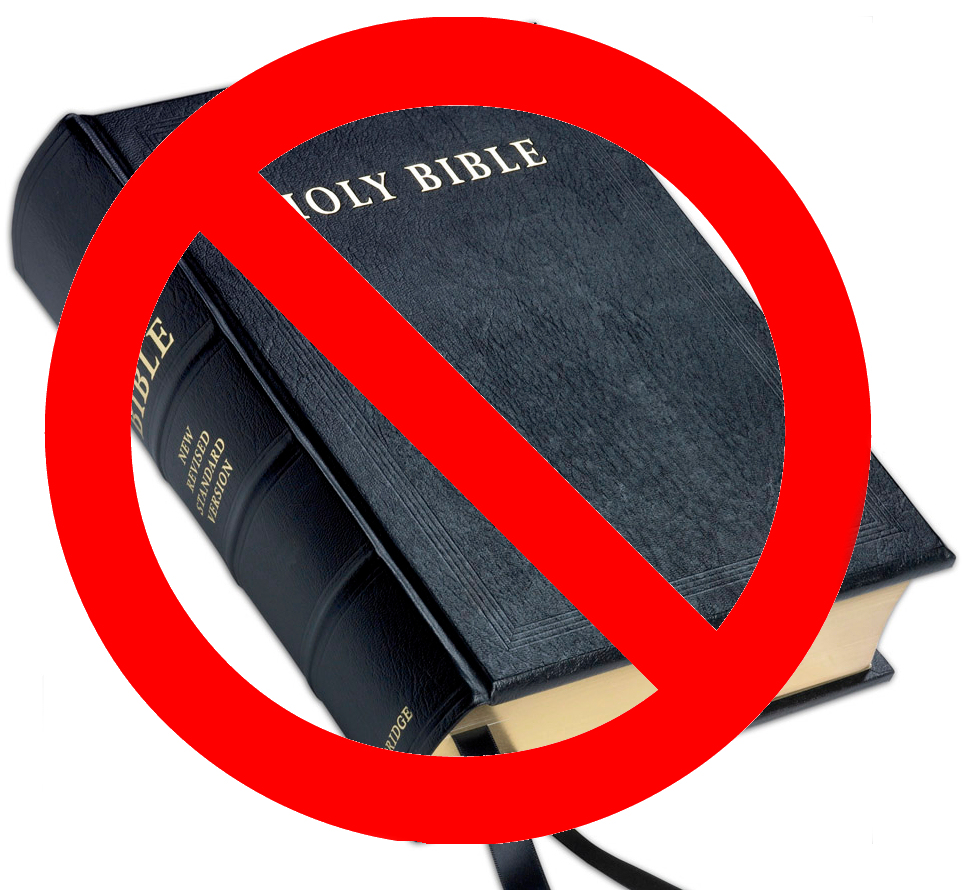
If No One Had A Bible
Try to imagine it: No Bibles anywhere. No King James. No NIV. Not even a paperback copy of "The Message".
What would that be like?
Regardless of how such a thing might happen, try to imagine what it would be like to never have access to the Bible - ever again.
In some ways, I think our world might actually be a better place if no one had a Bible anymore.
Maybe if we didn't depend on a book for everything we'd start to discover an inner desperation and a hunger for a deeper experience of Jesus.
Not only that, if there were no Bibles, we just might start to value listening to one another share testimonies of Jesus. Especially if there was no more need to hear from the resident Bible expert or scholar talk for an hour every weekend.
Imagine sitting around your living room with friends and listening to people share what Jesus was saying or doing in their lives that week. Imagine someone closing their eyes and quoting verses about how nothing can separate us from the love of God, or about how Jesus died for us while we were still enemies of God?
Don't you think this might help us to connect with one another - and with Jesus - more directly?
Maybe I'm the only one, but the more I think about this the more convinced I am that we might just be better off without our Bibles.
Now, I get it. I'm talking about what it would be like to first learn what the Bible says and study it and memorize it before experiencing those words in a deeper and more intimate way.
But, what if we only had our memories of scripture to sustain us? What if we could only pass on to our children the verses that really spoke deeply to us? What verses would we choose?
Probably verses where Jesus says, "Father forgive them, for they know not what they do" and "Love one another as I have loved you" would dominate your memory.
Perhaps you'd want your children to remember certain Parables that Jesus shared, like the Prodigal Son, or the Treasure in the Field or the Sower of Seeds.
Chances are you probably wouldn't find it all that crucial to memorize verses where God commanded His people to slaughter every man, woman and child and warned them not to show any compassion while doing so. You might leave behind the verses about how blessed those people are who dash infants against the rocks.
That, to me, would be a very good thing.
If all we had left was Jesus and our memories of scriptures that really touched us and profoundly changed us, that wouldn't be so bad.
What do you think?
-kg
Thursday, August 31, 2017
The Schizophrenic God of Inerrancy
For those who embrace – even insist – on the inerrancy and
infallibility of the Bible, there emerges a very odd version of a God who
simply cannot make up His mind about things.
As an example, the infallible Scriptures are 100 percent
clear about the fact that God causes evil and creates disasters:
“When disaster [literally “evil”] comes to a city, has not
the Lord caused it?” [Amos 3:6]
“I form the light and create darkness, I bring prosperity
and create disaster [“evil”]; I the Lord, do all these things.” [Isaiah 45:7]
“The LORD said to him, "Who gave human beings their
mouths? Who makes them deaf or mute? Who gives them sight or makes them blind?
Is it not I, the LORD?” [Exodus 4:11]
These verses, and several others like them, affirm without
any doubt that God is the one who brings disaster, creates evil and makes
people deaf and blind.
This is an inerrant and infallible statement of fact
supported by an equally infallible and inerrant Holy Bible.
However, there are other scriptures that contradict these
ideas and instead say:
"God is light, and in Him there is no darkness at
all" [1 John 1:5]
“His works are perfect, and all his ways are just. A
faithful God who does no wrong, upright and just is he” [Deut. 32:4]
Jesus also affirmed that it was Satan who came to “steal,
kill and destroy,” not God.
So, taking all of these infallible and inerrant verses
together, we know without a doubt that God does no wrong, and doesn’t destroy
or kill, but that He most certainly brings evil, creates darkness and hands out
birth defects.
We also know that God was the one who commanded David to
take a census and then punished 70,000 people by killing them with a plague
when David obeyed. [See 2 Sam.24:1]
At the same time, we clearly see that it was Satan who incited
David to take a census, not God. [See 1 Chronicles 21:1]
We also know that God never tempts anyone to do evil [See
James 1:13].
So clearly these inerrant and infallible verses tell us that God,
and Satan, both commanded David to take a census and then God punished David
and his people for giving in to the temptation which God never tempted him
with.
Does that make sense to you?
Try this one.
“Just as it pleased the Lord to make you prosper and
increase in number, so it will please Him to ruin and destroy you.” [Deut.
28:63]
“As surely as I live, declares the Sovereign Lord, I take no
pleasure in the death of the wicked!” [Ezekiel 33:11]
So, God is pleased to destroy His people, but He takes no
pleasure in their death.
One more.
“I, the Lord your God, am a jealous God, punishing the children
for the sins of the fathers.” [Exodus 20:5; Deut. 5:9]
“As surely as I live, declares the Sovereign Lord, you will
no longer quote this proverb in Israel…he will not die for his father’s sin; he
will surely live, but his father will die for his own sin…the son will not share
the guilt of the father, nor will the father share the guilt of the son.”
[Ezekiel 18:3;17-19]
Clearly, according to these inerrant and infallible verses
of scripture, God punishes children for the sins of their fathers, but a son
will not die for his father’s sins, nor share the guilt of his father, nor will
the father share the guilt of his son.
Got it?
If you do, please explain it to the rest of us.
All I can see is that there are competing voices in the
scriptures. Some prophets see God one way – causing evil, creating birth
defects and punishing sons for the sins of their fathers – and other prophets
see God a different way – not causing evil or tempting people, or punishing
sons for their father’s sins and taking no pleasure in the death of anyone.
Those who insist on an inerrant scripture ignore these
discrepancies, or turn somersaults to make each contradictory statement true while
ignoring the very obvious fact: The voices we hear in scripture are not
infallible, nor inerrant.
So, what can we do about these verses? How can we discern which
ones speak truthfully about God’s character and which verses miss the mark?
According to Paul, “The person with the Spirit makes
judgments about all things” [1 Cor. 2:15] and while quoting Isaiah’s rhetorical question
“Who has known the mind of the Lord so as to instruct Him!?” [Isa. 4:13]
responds shockingly: “But we have the mind of Christ!” [v. 17]
So, who dares to challenge and question the scriptures?
We do!
Why?
Because we have the mind of Christ.
Paul even reminds us that we will judge angels [1 Cor. 6:3];
and who are “angels” but “messengers from God”? [The word "angel" in scripture is literally translated as "messenger of God"]
Do we have an obligation to read the Scriptures through the
lens of Jesus and with the mind of Christ?
Absolutely!
Otherwise we are left with a schizophrenic God who is both
good and evil, who is both tempting and never-tempting, who both creates birth defects
and heals them, who delights in destruction and takes no pleasure in it, etc.
Is God the author of confusion?
No.
Is God the one who is confused about who He is and what He
does, or could it be that those who wrote about Him prior to Christ couldn’t
see Him as clearly as we do now?
If you have seen Jesus, you have seen the Father. There is
no clearer picture of Him than this.
The only way to know God any better is to know Jesus. The more you come to know Him, the more you can clearly see through the mind of Christ what God is like.
-kg
Wednesday, August 30, 2017
LITERAL HERETICS
The first real "heretic" of Christianity was a man named "Marcion" who saw the radical difference between the God of the Old Testament scriptures and the God revealed by Jesus.
But this was not his heresy. In fact, many -if not all- early Christians also saw this same radical difference between the two testimonies of God's nature.
What's more, all of those early Christians also rejected the violence of God in the Old Testament scriptures and fully embraced the radical enemy-love taught by Jesus.
There are no dissenting voices in the early Christian church when it comes to non-violence and enemy love whatsoever.
So, what was Marcion's heresy? It was his solution for responding to the differing perspectives of God between those two Testaments that got him labeled a heretic.
Marcion's solution was to literally throw out the entire Old Covenant and to claim that the God revealed in those Hebrew scriptures was actually a demon.
[Now, that's a heresy!]
When another early Church Father wrote to rebuke Marcion's extreme response, it was not to dismiss the idea that there were obvious differences between the way God was viewed in the two Covenants.
In fact, Origen agreed with Marcion that there were differences between God as Moses and the other Prophets spoke of Him and the "Abba" Father God as revealed through Jesus.
The most surprising thing about Origen's rebuke of Marcion was that he realized that the heresy was rooted in one thing: Reading the Bible literally.
The reason that is so surprising - even ironic - is that there are Christians today who insist on reading the Bible literally and yet still consider Marcion a heretic.
In other words, today's Bible Literalists see Marcionism as a heresy even though the sin of Marcionism is specifically defined by Origen as reading the Bible too literally.
What they miss is that no one considered Marcionism a heresy for claiming that Jesus was right about who God was and what God looked like.
Every early Christian embraced that idea. All of them.
The idea that Jesus was - and is - the clearest picture anyone could ever have of God was universally accepted by the early Christian Church.
This was not heresy. It was Christianity.
Origen agreed with Marcion that a literal view of God as seen in the Old Testament scriptures "would not be entertained regarding the most unjust and cruel of men" and went on to say:
"Holy Scripture is not understood by [Marcion] according to its spiritual, but according to its literal meaning" [De Principiis, Origen, 4.8-9]
In other words, Marcion went off the rails because he read the Bible too literally. By reading the Bible literally, Marcion could not reconcile the God of Moses - who commanded genocide and delighted in the dashing of infants against the rocks - and the God of Jesus - who showed love and mercy to the just and the unjust and forgave sinners freely.
Therefore, Marcion could only do one thing: He jettisoned the entire Hebrew Bible and rejected the God he read about there as a demonic aberration of Jesus' "Abba" Father God.
But, as Origen and the other Church Fathers demonstrated, there is a better way than this.
Instead of taking everything we read in the Old Testament about God as a literal fact - as if those words are dictated by God and transcribed by dispassionate observers with no bias of their own - we should read those scriptures through the lens of Jesus.
Jesus is our best and most accurate testament of who God really is.
Rejecting Marcionism needs to include a rejection of a literal reading of the Old Testament scriptures.
-kg
NOTE: Special thanks to Derek Flood's book "Disarming Scripture" for a comparison of Origen and Marcion.
Tuesday, August 29, 2017
HERETICS LIKE PAUL
If you and I read the Old Testament scriptures the way Paul the Apostle did, we'd be called heretics.
For example, if you read Psalm 18:40-49, the passage is all about how God will destroy the Gentiles and pour out His vengeance on them:
"I destroyed my foes. They cried for help, but there was no one to save them— to the Lord, but he did not answer.
"I beat them as fine as windblown dust; I trampled them like mud in the streets.
You have delivered me from the attacks of the people; you have made me the head of nations.
People I did not know now serve me, foreigners cower before me;
as soon as they hear of me, they obey me. They all lose heart;
they come trembling from their strongholds.
"I destroyed my foes. They cried for help, but there was no one to save them— to the Lord, but he did not answer.
"I beat them as fine as windblown dust; I trampled them like mud in the streets.
You have delivered me from the attacks of the people; you have made me the head of nations.
People I did not know now serve me, foreigners cower before me;
as soon as they hear of me, they obey me. They all lose heart;
they come trembling from their strongholds.
"The Lord lives! Praise be to my Rock! Exalted be God my Savior!
He is the God who avenges me, who subdues nations under me, who saves me from my enemies.
You exalted me above my foes; from a violent man you rescued me.
You have delivered me from the attacks of the people; you have made me the head of nations.
People I did not know now serve me, foreigners cower before me;
as soon as they hear of me, they obey me. They all lose heart;
they come trembling from their strongholds.
"The Lord lives! Praise be to my Rock! Exalted be God my Savior!
He is the God who avenges me, who subdues nations under me, who saves me from my enemies.
You exalted me above my foes; from a violent man you rescued me.
He is the God who avenges me, who subdues nations under me, who saves me from my enemies.
You exalted me above my foes; from a violent man you rescued me.
"Therefore I will praise you, Lord, among the nations;
I will sing the praises of your name."
It's pretty gruesome stuff, to be honest.
I will sing the praises of your name."
It's pretty gruesome stuff, to be honest.
But notice how Paul the Apostle quotes - or rather heavily misquotes - this text in Romans 15:9:
"For I tell you that Christ has become a servant of the Jews on behalf of God's truth, to confirm the promises made to the patriarchs so that the Gentiles may glorify God for His mercy, as it is written:
You have delivered me from the attacks of the people; you have made me the head of nations.
People I did not know now serve me, foreigners cower before me;
as soon as they hear of me, they obey me. They all lose heart;
they come trembling from their strongholds.
He is the God who avenges me, who subdues nations under me, who saves me from my enemies.
You exalted me above my foes; from a violent man you rescued me.
"Therefore I will praise you, Lord, among the nations;
I will sing the praises of your name."
Wait. Seriously?
This is what you call "taking scripture out of context" my friends.
Paul completely takes a passage about how God will take vengeance on the Gentiles and destroy them and (mis)quotes it as a way to prove that God is actually glorified for showing mercy to the Gentiles.
Trust me: No Christian pastor or Bible teacher would ever get away with anything so irresponsible as this today.
And this is not the only example. Oh, no.
Paul does it again in the very next verse of Romans 15:10 when he radically misquotes Deuteronomy 32:43 like this:
"Again it says, 'Rejoice O Gentiles, with His people, for He will avenge the blood of His servants, He will take vengeance on His enemies, and make atonement for His land and people."
Uh....yeah. Ok, then.
What's going on here? How can Paul do such a thing?
Is he trying to pull a fast one? Hardly.
Instead, Paul is reading the Old Testament scriptures through the lens of Christ. He starts by knowing who God is - who He really is - by looking at Jesus.
In Christ, Paul can clearly see that the Father is NOT a God of vengeance and wrath. He understands that Jesus has subverted that Old Covenant idea of God and revealed to us a God who shows mercy, loves everyone and redeems even His enemies.
See, there was a time when Paul went by the name "Saul of Tarsus" and he went around doing what any good Pharisee did - he persecuted anyone who dared to question the authority of Scripture.
In fact, it was in the act of persecuting the Christian church that Jesus showed up, knocked him off his ass [literally] and opened Paul's eyes to the truth: God wasn't pleased with violence.
Paul experienced mercy and forgiveness from the very people he was trying to murder. He heard the Gospel of Peace for the first time and very soon he came to realize that God was not who he thought He was.
After this, Paul counted all of that scriptural "expertise" as manure and devoted himself to one thing: "to know Christ and the power of His resurrection" [Phil. 3:10]
Why would Paul do that? Why is it so important to "know Christ"?
Because without Christ, you and I cannot see God. There is a veil that covers our eyes if we try to understand the Scriptures without reading them through the lens of Jesus. [See 2 Cor. 3:15]
This is why Paul could now read violent passages in the Hebrew Scriptures and dismiss them as the flawed perspectives of men who had yet to know Christ as he had now come to know Him.
By knowing Christ, Paul could now clearly see who the "Abba" Father God really was: A God who looked and acted like Jesus.
As long as we continue to follow the letter of the Law, we will reap death. [Romans 7:10]
Paul and the other Apostles invite us to see God through brand new eyes: The eyes of Jesus.
Through Him, we can clearly see a God who refuses to beat His children.
We, instead, see an Abba who longs to draw everyone to Himself and transform each of us into people who look and act like Jesus.
"For the law was given through Moses; grace and truth came through Jesus Christ." [John 1:17]
-kg
NOTE: Special thanks to Derek Flood for pointing out Paul's Christ-like hermeneutic in his book "Disarming Scripture".
Wednesday, August 23, 2017
The Problem With Saying The Bible Is The Word Of God
Inevitably, whenever I engage with someone over the issue of
whether or not the Word of God is Jesus or a Book about Jesus, the argument is
always raised that “All scripture is God-breathed” [quoting from 2 Timothy 3:16] and
therefore no one has any authority to question the Bible.
There are more than a few problems with this.
First of all, when Paul wrote those words in 2 Timothy, he
was not thinking of the “Bible” in the same way that you and I might think of
it today.
To Paul, and to most First Century believers, the “Scriptures” were the Law
and the Prophets and the Books of Wisdom, which would include the Psalms. It
probably also included works that most Protestants today do not consider to be
scripture like the Book of Enoch [which gets quoted in the New Testament book
of Jude] and the Wisdom of Solomon and other Hebrew writings like Sirach and
Tobit, that many considered to be Holy writings.
One thing for certain is that Paul was not thinking of his own epistles when he said this. It must be stressed that Paul did not think that he
was writing Scripture when he wrote to the churches in Ephesus, Corinth, Rome, etc. He thought – correctly – that he was writing letters to
various Christian communities who needed encouragement and wisdom about certain
challenges that threatened their faith.
He also was most certainly not thinking about any of the four Gospels which were not even written when he said this.
Yes, we are very blessed to have copies of
some of those epistles, and other Apostolic writings, but none of those people
had any inkling that they were writing something that one day might be added to
a book alongside Genesis, Isaiah or Malachi and considered scripture.
Secondly, the book that eventually became known as the Bible
went through several wildly different forms before finally being Canonized in
the Fourth Century. Before this the church referred to a fluid collection of Hebrew scriptures
and First Century Apostolic writings and the various Gospel accounts for insight.
In other
words, their idea of scripture looked radically different from ours and, depending on who you were talking
to and what time in Church history, you might be surprised what was considered scripture and what was not.
For example, several New Testament books that every
Protestant today considers an essential part of the Bible were, at various times and
by various Church Fathers, eliminated from the accepted Canon of Scripture.
Books like Esther, Hebrews, Jude, Revelation, 2 Peter, 2 and 3 John and James
were left out of several lists of accepted books of scripture by many church leaders.
Consequently, many other books
that most Protestants have never even heard of were accepted by some as Canon like the
Didache, the Shepherd of Hermas, the Book of Baruch, Jubilees and the Letter of
Jeremiah, for example.
Sometime around 363 AD several attempts were made to
establish an official and accepted list of which books or epistles were
scripture and which should be eliminated. There was no firm consensus on the
contents of that list for several decades, but eventually a group of Christian
leaders – whose names the average christian does not even know – decided for the rest of us
forevermore which books were to be accepted and which were to be rejected as
scripture.
Today there is still no universal consensus on what is and
what is not the “Bible” or Holy Scripture.
Like the early church, depending on who you ask, and where
you live, and what Christian tradition you belong to, the book you carry around
and refer to as the Holy Bible might look very different from another book from
another Christian community that might be called the “Bible.”
I’ve started to wonder, “How do we know those people who
decided what was and what wasn’t Scripture got it right?” Furthermore, I’ve
started to wonder who gave those men the authority to decide that God was no
longer speaking to His people and inspiring them to write down what the Holy
Spirit was revealing to them about the nature and character of God?
Why do we so blindly accept the authority of these nameless
and faceless men who made these decisions for the rest of us? What if they didn’t
really have the authority to make this decision? What if they left writings
out, or included writings, in error? How are we so sure that they were inerrant
and infallible in their process?
Ultimately, for those who insist on inerrancy and
infallibility of scripture, what they are actually trusting in is the perfection of those decisions made by a group of people centuries ago about what was and wasn't worthy to be included in the Bible.
Frankly, the canon of Scripture most of us hold to today was
originally compiled and assembled by people that most consider to be heretics
today – namely Marcion and Origen – who were the original compilers of a canon
and the basis for the bulk of what we accept as scripture, respectively.
If we
reject many of the theological assumptions of Marcion and Origen, why do we
unquestionably accept their judgement regarding what is and what isn’t to be
included in the Holy Bible?
Honestly, I am playing devil’s advocate here in many
respects because I don’t outright reject everything that those two Church
Fathers taught simply because I disagree with some of their theological
conclusions. But for those who do reject those Church Fathers as heretics, I
have to wonder why they have no trouble accepting their respective lists of what is and
what isn’t their Bible.
Ultimately, it boils down to this: Our Scriptures are a
loose collection of writings by various people throughout history who were
inspired by God to write down what they believed and what they experienced of
God.
Some of what we may currently accept as Scripture might not actually be
inspired by the Holy Spirit. Some of what we reject, or are simply unaware of
due to obscurity, might actually be worth considering as a legitimate source of
wisdom about God.
But everything - and I do mean everything - needs to be
filtered through the lens of Christ. If it lines up with our revelation of Him,
we should take it to heart. If it disagrees with the Word of God who became
flesh and came to dwell within us, we should dismiss it as being the flawed
testimony of men.
Jesus is our hermeneutic. Jesus is our ultimate authority.
Everything else is subject to Him and His authority.
This should cause each of us to cling more to Jesus and to dive deeper into Christ for wisdom and insight.
After all, if we abide in Him then we experience Christ abiding in us, and this is the only way any of us can bear fruit.
-kg
Tuesday, August 22, 2017
From New Covenant Theology to Jesus Theology
New Covenant Theology was the "new thing" a few decades ago and many were called heretics for defending and promoting it.
Previously, the two main theologies were Covenant Theology and Dispensationalism.
According to Wikipedia:
"New Covenant Theology (teaches) that the person and work of Jesus Christ is the central focus of the Bible. One distinctive result of this is that Old Testament Laws have been abrogated or cancelled with Jesus' crucifixion, and replaced with the Law of Christ found in the New Covenant."
This view also says that:
"The New Testament interpret(s) the Old Testament...when the NT interprets an OT promise differently than the plain reading, then New Covenant Theology concludes that that is how God interprets His promise."
"As an example, Amos 9:11-12 is quoted by James in Acts 15 and is interpreted by him to associate the rebuilding of "David's fallen tent" with the Gentiles' salvation. This would be a highly surprising interpretation to the Jewish believers, since there is no precedent for it to be interpreted as anything other than a promise to the nation of Israel. (Instead), New Covenant Theology says that God has given us His interpretation of that passage, through James."
As for me, New Covenant Theology has been my own personal perspective on scripture for a while now. Most of what I have written here on my blog, and in my various books, has been from this perspective.
But lately, my theology has started to progress a bit further than this.
I embraced New Covenant Theology because it affirmed that the Flat Bible perspective is flawed and reorients scripture with Christ as our ultimate authority. But unfortunately it stops short of allowing Jesus to fully reform our ideas about God.
So, while New Covenant Theology (NCT) affirms Christ as the center of scripture, it fails to completely embrace Jesus as our one and only image of who the Father is and what He is really like.
Where NCT falters is in fully admitting that the revelation of the Father found in Jesus is often at odds with what the Old Covenant prophets have to say about Him.
Furthermore, the NCT position also fails to admit that the prophets themselves are often at odds with one another about what God said and what God's character is like. [See, for example the differing statements made in the OT scriptures about whether God did, or did not, command the Israelites to offer animal sacrifices].
To help explain this, let me borrow an analogy. There are various answers to the question "Where do babies come from?" and someone might say "the stork brings them" and another might say "when mommy and daddy love each other very much the baby starts to grow in her tummy" and still another might say "the male contributes the sperm which he secretes during sexual intercourse to fertilize the egg which the woman provides and in 9 months the embryo matures into a fetus and a child is born."
Two of those answers might be considered "true", one of them is obviously a story designed to symbolize the reality without actually addressing any of the mechanics, and yet all of them are still an attempt to answer the question about where babies come from.
This is similar to what we have in the Hebrew Bible when it comes to question of what God is like. Some voices give us the "stork" version of the story, with great symbolism and hyperbole. Some voices give us an approximation of the answer. Other voices may give us more detailed and specific answers that more closely align with reality.
For us, Jesus is the reality. He is "the exact representation" of the Father. He is the one in whom "the fullness of the Deity lives in bodily form." He is "the Word made flesh who dwelt among us."
So, the best picture of the Father is found in Christ. If we have "seen Him," we have truly and accurately "seen the Father" in the most complete and full way possible.
Because "no one has ever seen God" except Jesus and the reason He came was to reveal the Father to us like no one else before ever could, or did.
In our analogy, David the Psalmist might be one who provides the more poetic "stork version" of the Father's character. Isaiah and Jeremiah might be the "mommy loves daddy" version of the story. But only Christ gives us the version of the story that includes every specific detail we need to fully understand who the Father is and what the Father is like.
As long as we insist upon holding tightly to the rigid inerrancy of the Old Testament scriptures, we will forever be kept from fully embracing the clearest and most accurate portrayal of who God really is.
Until we relax our grip on the idea that the Old Testament prophets were truly seeing God clearly and recognize that the Abba Father we see revealed in Christ overrides those limited and flawed perspectives of God, we will remain confused about who God really is.
As long as we allow the tarnished testimony of Moses to describe God as one who commands His people to slaughter infants and toddlers without showing compassion, we will forever stand in opposition to the testimony of Jesus who showed us an Abba Father God who loves children, cares for His enemies, shows compassion to the broken and commands us to do the same - specifically because this is who He is and what He is like. [See Matt. 5:44-45]
So, even as those who stood up and defended the New Covenant Theology view a few decades ago were considered heretics and false teachers by the Dispensationalists and Covenant Theology teachers of their day, we should not be surprised when the same charge is leveled at us who affirm a Jesus-centric perspective of God today.
Ultimately I believe it simply boils down to this: Who is our authority? Is it the Bible? Or is it Christ? Do we center our theology on a book, or on a person who is indeed God Himself incarnate?
The Book, as wonderful as it may be, is imperfect. It contains the testimony of men who sometimes saw clearly and sometimes did not. The Book contains the voices of men who don't always agree with one another about who God is and what God is like.
Our choice is simple: We either agree with Jesus about who God is, because He is God made flesh, or we side with those Old Testament prophets who were not perfect, not flawless and not Immanuel [God with us].
I choose Jesus.
-kg
Wednesday, July 26, 2017
The Scriptures Are Clear: The Bible Is Not The Only Way We Can Know God
Does the Bible really say that the only way to know God is through the Scriptures? You might be surprised at the answer.
In the ongoing conversation about the identity of the “Word of God” and differences between the Bible and Christ, we often hear reactions that sound something like this:
“You cannot know Christ apart from the scriptures. Everything we know about Christ comes to us from the bible.”
That sounds right, doesn’t it? I mean, how else could we know anything about God or about Jesus apart from the Bible? (Right?)
But, if we look to the Bible to support this notion we might be in for a little surprise.
As we look deeper we run across verses that suggest something a lot more breath-taking than what we might have expected.
For example, the Gospel of John tells us that “The Word of God became flesh and dwelt among us” (John 1:14) and that this same Word of God is Jesus (John 1:1) and now Jesus (the Word of God) lives within every one of us who abides in Him (John 15:4).
So, if the Word of God is Jesus, and if Jesus now lives within me, then I have the Word of God inside of me.
For example, the Gospel of John tells us that “The Word of God became flesh and dwelt among us” (John 1:14) and that this same Word of God is Jesus (John 1:1) and now Jesus (the Word of God) lives within every one of us who abides in Him (John 15:4).
So, if the Word of God is Jesus, and if Jesus now lives within me, then I have the Word of God inside of me.
This means we can know Christ the way we know our own voice, or our own heartbeat, because He is alive within us.
The Scriptures also tell us that we “have the mind of Christ” (1 Cor. 2:16) right now and that we can discern “the things that come from the Spirit of God…because they are discerned only through the Spirit” (1 Cor. 2:15) and this Spirit is now alive within us.
Jesus also affirms to us that we can hear His voice and that He, as the Good Shepherd, is more than capable of making Himself heard:
“I am the Good Shepherd and my sheep hear my voice” (See John 1:1-16)
So, not only can we all hear our Master’s voice individually, we are also empowered by the Holy Spirit who “leads us into all truth” (John 16:13), as Jesus promised us.
The Apostles also affirmed these same ideas by pointing to the evidence of the Holy Spirit within us as proof that we belong to Christ and that we can know the truth apart from anything else:
“As for you, the anointing which you received from Him abides in you, and you have no need for anyone to teach you; but as His anointing teaches you about all things, and is true and is not a lie, and just as it has taught you, you abide in Him.” (1 John 2:27)
The anointing every Christian has received is from the Holy Spirit and this anointing teaches us about all things.
The Scriptures also tell us that we “have the mind of Christ” (1 Cor. 2:16) right now and that we can discern “the things that come from the Spirit of God…because they are discerned only through the Spirit” (1 Cor. 2:15) and this Spirit is now alive within us.
Jesus also affirms to us that we can hear His voice and that He, as the Good Shepherd, is more than capable of making Himself heard:
“I am the Good Shepherd and my sheep hear my voice” (See John 1:1-16)
So, not only can we all hear our Master’s voice individually, we are also empowered by the Holy Spirit who “leads us into all truth” (John 16:13), as Jesus promised us.
The Apostles also affirmed these same ideas by pointing to the evidence of the Holy Spirit within us as proof that we belong to Christ and that we can know the truth apart from anything else:
“As for you, the anointing which you received from Him abides in you, and you have no need for anyone to teach you; but as His anointing teaches you about all things, and is true and is not a lie, and just as it has taught you, you abide in Him.” (1 John 2:27)
The anointing every Christian has received is from the Holy Spirit and this anointing teaches us about all things.
Now, does any of this mean we don’t need the Bible? Far from it.
I mean, why wouldn’t we avail ourselves of the all the treasures provided for us in the Scriptures? That would be unnecessarily foolish.
But my point is this: According to the Bible, we can know God, and Christ, by the indwelling Spirit of the Living God within us.
This is what the Bible teaches us about how we primarily know God and Christ and the Truth: By the Spirit of God.
So, according to the Bible, everything we know about Christ comes from Christ. Yes, some of it does come from the Bible, (and that of course comes from Christ, too), but even more wisdom and truth is available to us directly from the One who lives and breathes within us on a daily basis.
I think that’s worth at least one big “Halleluiah!” Don’t you?
Are you ready for a little more excitement? This is all exactly what the New Covenant is all about.
“Behold, days are coming,” declares the Lord, “when I will make a new covenant with the house of Israel and with the house of Judah…this is the covenant which I will make with the house of Israel after those days,” declares the Lord, “I will put My law within them and on their heart I will write it; and I will be their God, and they shall be My people. They will not teach again, each man his neighbor and each man his brother, saying, ‘Know the Lord,’ for they will all know Me, from the least of them to the greatest of them,” declares the Lord, “for I will forgive their iniquity, and their sin I will remember no more.” (Jeremiah 31:31-34; emphasis mine)
Notice that the result of this New Covenant would be that God’s people would not turn to teachers for wisdom about God because “My law (will be) within them and on their heart I will write it” and because “they will all know me, from the least of them to the greatest of them”.
When these words were written it sounded like science fiction. How could God do this? What would it be like to have God’s Law written on our hearts? What would it be like not to depend on teachers to know God? How amazing would it be if everyone who belonged to God knew Him so intimately?
Now, today, because of Christ’s accomplishment and fulfillment of the Law and the Prophets, the Holy Spirit has been poured out on all flesh. We, right now, are those people that Jeremiah prophesied about.
This is what the Bible teaches us about how we primarily know God and Christ and the Truth: By the Spirit of God.
So, according to the Bible, everything we know about Christ comes from Christ. Yes, some of it does come from the Bible, (and that of course comes from Christ, too), but even more wisdom and truth is available to us directly from the One who lives and breathes within us on a daily basis.
I think that’s worth at least one big “Halleluiah!” Don’t you?
Are you ready for a little more excitement? This is all exactly what the New Covenant is all about.
“Behold, days are coming,” declares the Lord, “when I will make a new covenant with the house of Israel and with the house of Judah…this is the covenant which I will make with the house of Israel after those days,” declares the Lord, “I will put My law within them and on their heart I will write it; and I will be their God, and they shall be My people. They will not teach again, each man his neighbor and each man his brother, saying, ‘Know the Lord,’ for they will all know Me, from the least of them to the greatest of them,” declares the Lord, “for I will forgive their iniquity, and their sin I will remember no more.” (Jeremiah 31:31-34; emphasis mine)
Notice that the result of this New Covenant would be that God’s people would not turn to teachers for wisdom about God because “My law (will be) within them and on their heart I will write it” and because “they will all know me, from the least of them to the greatest of them”.
When these words were written it sounded like science fiction. How could God do this? What would it be like to have God’s Law written on our hearts? What would it be like not to depend on teachers to know God? How amazing would it be if everyone who belonged to God knew Him so intimately?
Now, today, because of Christ’s accomplishment and fulfillment of the Law and the Prophets, the Holy Spirit has been poured out on all flesh. We, right now, are those people that Jeremiah prophesied about.
We are the people who now have God’s Law written on our hearts. We are the people who are now empowered by the Spirit of the Living God to “Know the Lord” because we can all know Him, “from the least to the greatest.”
Doesn’t that excite you? Isn’t that great news?
How sad would it be to live in such a time as this and not take advantage of such a wonderful gift from God?
Jesus declared this New Covenant in His blood. We remember His death and Covenant with us every time we eat the bread and drink the cup. Why stop there? Why not continue onward to claim the promises that come with this New Covenant reality? Why not listen for the voice of our Good Shepherd and learn to “Know the Lord” in this one-on-one way?
In fact, if we don’t live this way, we are actually choosing to live an Old Covenant life and to embrace and Old Covenant kind of faith rather than a truly Christ-centered life and faith that leads us to life and grace and truth.
Jesus was quick to remind us that we have no need of any other teacher except Him:
"Nor are you to be called instructors, for you have one Instructor, the Messiah" (Matt.23:10)
Please don’t miss this, my friend. It was for freedom that Christ has set you free from the Old Covenant kind of life. The opportunity to know God intimately and to hear the voice of Jesus directly is wide open to you now.
Doesn’t that excite you? Isn’t that great news?
How sad would it be to live in such a time as this and not take advantage of such a wonderful gift from God?
Jesus declared this New Covenant in His blood. We remember His death and Covenant with us every time we eat the bread and drink the cup. Why stop there? Why not continue onward to claim the promises that come with this New Covenant reality? Why not listen for the voice of our Good Shepherd and learn to “Know the Lord” in this one-on-one way?
In fact, if we don’t live this way, we are actually choosing to live an Old Covenant life and to embrace and Old Covenant kind of faith rather than a truly Christ-centered life and faith that leads us to life and grace and truth.
Jesus was quick to remind us that we have no need of any other teacher except Him:
"Nor are you to be called instructors, for you have one Instructor, the Messiah" (Matt.23:10)
Please don’t miss this, my friend. It was for freedom that Christ has set you free from the Old Covenant kind of life. The opportunity to know God intimately and to hear the voice of Jesus directly is wide open to you now.
The Lord is available to you. Listen for His voice.
-kg
Wednesday, June 14, 2017
Why I Love The Word of God
I love to read. Ever since I was very young, my parents would read to me. I think that’s why I love stories, and why I, eventually, became a writer.
When I was in Elementary school, I read anything and everything I could put my hands on. My earliest favorites were Sherwood Anderson, Ambrose Bierce, and Isaac Asimov. But soon I moved on to Ian Fleming, Alistair MacLean, Alan Dean Foster and Ray Bradbury.
One day, while visiting our pastor’s house, his wife noticed I was carrying a satchel of books with me and asked me an interesting question: “Have you ever read the World’s Best-Selling book?”
I stopped to consider her question and then said, “No, probably not. What is it?”
She replied: “It’s an amazing old book full of adventure, danger, love, betrayal, war and redemption.”
“Sounds cool,” I said. “What’s the title?”
Of course, she was talking about the Bible, and based on her challenge I started to read it every night before going to bed.
My routine was to lay in bed and read whatever adventure novel I was devouring at the moment and then setting that down to read at least one chapter from the Bible before I went to sleep each night.
In just over a year and a half, I had read through most of the entire Bible.
Why so quickly? Because, first of all, I often read more than just one chapter, and second of all, I skipped most of Leviticus because it was just too boring.
But that was the first time I read the Bible.
Later, as a Junior High student I started to read the Bible because I was helping our youth pastor to lead Bible Studies. As a High School student I was leading book studies in the Gospel of Luke [which I immediately regretted because each chapter was just a marathon to get through each week], and Isaiah [because things in the Middle East were heating up and everyone – including me – was convinced that the End Times were upon us].
In college I read through the Bible because I discovered a renewed love for Jesus at a Baptist Retreat Center in Glorietta, New Mexico. Some of the seminars and workshops I attended got me interested in Spiritual Warfare so I started studying that topic on my own.
Of course, as a college student with a minor in Philosophy I quickly encountered opposition to my dearly-held faith. A few of my professors really attacked Christianity and that sent me back to my Bible to find out if what they were saying about Jesus and the Scriptures was true or not. Because of this I started really getting into Apologetics, and Young Earth/Old Earth evidences and even put together a little 4 part series of lectures about Evolution and Creation.
But all through this I read and re-read my Bible. I underlined. I circled. I made notes in the margins. I stuck notes all through the Bible on folded slips of paper. I wrote references to important verses in every blank page and white space I could find.
Eventually that Disciples Study Bible I bought in college started to fall part. First the cover began to come lose. I wrapped the spine in duct tape and kept on reading it and studying it.
About five years ago I was leading a Men’s Bible Study for some guys from Saddleback Church. They took up a collection and bought me a brand new ESV Study Bible to replace my raggedy duct tape Bible, but I honestly still use that one more often because it has all my notes and I know where to find everything in it.
I love my Bible. I really do. If you tried to come over to my house and take my Bible away from me, you’d have to cut my arms off to get it out of my hands.
But, as much as I love my Bible, I love Jesus even more. A hundred thousand million times more.
See, that book told me all about this magnificent person named Jesus who loved me and gave Himself for me. It pointed me to a God who would rather die than live without me. I fell in love – not with the Book which told me about Him – but with Jesus, Himself!
I’ve told you about my relationship with that Book, but I haven’t mentioned my incredible relationship with Jesus: I haven’t told you about how He revealed Himself to me; how He called me by His Spirit; how He answered my prayers; how He worked miracles in my life; how He whispered in my ear to stop me from getting shot dead by a prison sniper while performing with my band at a minimum security prison; about how He healed my Dad’s shattered spine and re-formed his vertebrae so he wouldn’t be paralyzed; about how He provided for my family financially while I was out of work for over a year and a half [the first time] and another year the time after that; about how He fulfilled His specific promises to me during that time in ways I could have never imagined; and about how He called us to start a church where 100 percent of the offering would go to help the poor in our community; and so much more.
But if I told you about those things here in this blog article and your response was only to say, “Wow! What a glorious article!” you would have missed my entire point, wouldn’t you?
Because what’s really glorious and awesome isn’t the blog or the article about what Jesus did for me. No, what’s amazing and awesome is Jesus and the article only informs you of how awesome He is.
The Bible is wonderful. I do love and appreciate my Bible so very much. But my love for Jesus is so far and away greater and more precious to me than anything else in the universe, that I can’t even begin to compare it to anything else.
Does this mean my Bible is useless? Hardly. I will use it today and tomorrow and every day for the rest of my life here on this earth. It is very useful to me.
But my relationship isn’t with a book about Jesus – it’s with Jesus, whom the book is about!
“In the past God spoke to our ancestors through the prophets at many times and in various ways, but in these last days he has spoken to us by his Son, whom he appointed heir of all things, and through whom also he made the universe. The Son is the radiance of God’s glory and the exact representation of his being, sustaining all things by his powerful word.” – Hebrews 1:1-3
“In the beginning was the Word, and the Word was with God, and the Word was God. He was with God in the beginning. Through him all things were made; without him nothing was made that has been made.” [John 1:1-3]
“The Word became flesh and made his dwelling among us. We have seen his glory, the glory of the one and only Son, who came from the Father, full of grace and truth….” [v.14]
God’s Word, at one time, was only written down on a page and bound in a book or wrapped in a scroll.
But when Jesus arrived that Word took on flesh and blood; laughed and cried; breathed and sang; taught and healed like never before.
There were some men who wrote down what they saw this Living Word do and say, but those words about that Word are not the Word. They are still words about Him, and our worship belongs to the God who is the Word – and to Him alone.
Thank you, Lord Jesus, for the Bible which tells of your excellent greatness. But thank you, even more, for your living presence within us that testifies day and night of your enduring love for us and causes us to cry out “Abba! Father!” and listen for your answer in the still, small voice of the Good Shepherd that every one of your sheep knows so well.
-kg
**
"You search the Scriptures because you think that in them you have eternal life; and it is they that bear witness about me, yet you refuse to come to me that you may have life." - Jesus [John 5:39-40]
Saturday, June 10, 2017
The Word of God and the Bible
Over
the last week or so I have been engaged in numerous online debates [mostly on
Facebook] about Jesus being the “Word of God” [as opposed to the Bible], and
Jesus being greater than the Scriptures.
Most
of those arguing against these ideas are assuming [wrongly] that I take a low
view of scripture. But that’s not at all what I’m saying.
My single aim is this: To point people to Jesus. If anything gets in
the way of people knowing Jesus and following Jesus, then I am going to do my
best to point it out and help people turn their faces and their hearts back to
Jesus.
For some Christians – not all of them – their Bible actually does get in their way. It takes the place in their hearts that should belong to Christ alone.
But, more and more I am encountering brothers and sisters in Christ who cannot separate the book from the person that book points to.
For some Christians – not all of them – their Bible actually does get in their way. It takes the place in their hearts that should belong to Christ alone.
But, more and more I am encountering brothers and sisters in Christ who cannot separate the book from the person that book points to.
Some have even flat-out argued that Jesus and the Bible are the same. Others
have asked if there is more of God to know outside of the Bible, as if He could
be bound in a book.
In response I have tried to point out that the Father gave
Jesus a name that is above every name, [see Phil. 2:1-11]. If so, then wouldn't
that also mean His name is above the Bible?
Now,
I realize that if I simply wrote about how awesome Jesus was, most Christians
would have no problem with any of that. The problem comes only when I dare to
suggest that Jesus' awesomeness eclipses the Bible.
And
that’s the problem, isn’t it?
Because Jesus
affirms that He is greater than Solomon, and that He is greater than the
Temple, and Jonah, Moses, Elijah, Jacob and Abraham.
All of
that is presumably ok. [At least no one has challenged me on those claims yet].
But
once I suggest that Jesus is greater than the book which was written by those
guys and that points to Jesus, that, apparently, is going too far?
“Does this mean we should just throw out our Bibles?”
[I hear this all the time]
Short answer: No.
Longer answer: I think I've said this a few dozen times, and I am more
than happy to say it again now:
I will not, would not, could not, and do not suggest throwing out the
scriptures.
I love the scriptures. I read them. I teach from them. I study them. I memorize them. I turn to them for guidance.
I value the scriptures.
If you tried to come over to my house and take away my Bibles you would have to cut off my arms to get them away from me.
Nowhere - not in this post, or in any of my blog articles, or in my books - never do I suggest that the Bible is worthless, or irrelevant, or that we should not read it or study it.
That is not what I am saying.
Maybe that is part of our ongoing misunderstanding? When I say that Jesus is greater than the book, or that the Word of God became flesh and not paper and ink, what some keep hearing me say is: “The Bible is useless”.
If you tried to come over to my house and take away my Bibles you would have to cut off my arms to get them away from me.
Nowhere - not in this post, or in any of my blog articles, or in my books - never do I suggest that the Bible is worthless, or irrelevant, or that we should not read it or study it.
That is not what I am saying.
Maybe that is part of our ongoing misunderstanding? When I say that Jesus is greater than the book, or that the Word of God became flesh and not paper and ink, what some keep hearing me say is: “The Bible is useless”.
For the record: I love, love, love,
LOVE the scriptures because they point me to Jesus.
But I love Jesus a
bazillion times more!
My relationship is not with a book. Even an amazing book like the Bible.
My relationship is with Jesus.
Yes, I would not know about Jesus if it wasn't for what I have read in scripture about Him. For that I am sincerely grateful. Very, very grateful.
But now that I DO know Jesus, I have a relationship with Him that is greater than my relationship with the book.
That does not mean I do not continue to read or study the book. Because I do. All the time.
What it does mean is that Jesus is more amazing and mysterious and astounding than any book - even the Bible - can ever fully describe.
Jesus is not the Bible. The Bible is not Jesus.
Jesus is the Word of God made flesh. He came to dwell among us, and now He lives within us by His Spirit.
I can hear His voice because He is the Good Shepherd and I am one of His sheep.
Does that mean I don't hear His voice through the Scriptures?
My relationship is not with a book. Even an amazing book like the Bible.
My relationship is with Jesus.
Yes, I would not know about Jesus if it wasn't for what I have read in scripture about Him. For that I am sincerely grateful. Very, very grateful.
But now that I DO know Jesus, I have a relationship with Him that is greater than my relationship with the book.
That does not mean I do not continue to read or study the book. Because I do. All the time.
What it does mean is that Jesus is more amazing and mysterious and astounding than any book - even the Bible - can ever fully describe.
Jesus is not the Bible. The Bible is not Jesus.
Jesus is the Word of God made flesh. He came to dwell among us, and now He lives within us by His Spirit.
I can hear His voice because He is the Good Shepherd and I am one of His sheep.
Does that mean I don't hear His voice through the Scriptures?
No, I do still hear His voice through the Scriptures.
But, I also hear His voice through the Holy Spirit.
I also hear His voice through other people, and sometimes through
dreams, or through circumstances and events, and sometimes even music and art.
Does any of that devalue the Bible?
No. I still value the Bible very much. [see above]
But none of that eclipses Christ Himself. He is not limited by any of those things but magnified.
-kg
Subscribe to:
Posts (Atom)


